Which Countries Allow Residency Without Relocation?
.png)
Residency without relocation has become one of the defining goals for globally mobile investors, and the numbers show why: a record 165,000 millionaires are projected to relocate internationally in 2026, up from 142,000 the year before (Source: New World Wealth).
Yet for every investor who physically moves, many more want the legal status, Schengen access, and family security that a second residency provides without uprooting their lives. That is exactly the gap a small set of programs is built to fill.
Bitizenship works at the center of this shift, structuring compliant, Bitcoin-aligned residency routes in Portugal and Italy for investors who want optionality without a forced move.
This guide walks through which countries allow residency without relocation, how their stay rules compare, and what to weigh before committing.
Key Takeaways
- Residency without relocation lets you hold legal status while living elsewhere.
- Portugal asks for 14 days every two years; Italy requires no minimum stay.
- Greece, the UAE, Malta, and Hungary also offer flexible stay rules.
- Bitizenship structures residency-without-relocation routes in Portugal and Italy for Bitcoin holders.
- Citizenship later usually demands real physical presence, unlike residency itself.
What Residency Without Relocation Actually Means
Residency without relocation refers to programs that grant you a legal residence permit, and the rights attached to it, without requiring you to live in the country full-time. The permit is real, the benefits are real, but the physical-presence obligation is light or absent.
This is the structural feature that separates a flexible second residency pathway from a traditional immigration route that expects you to move your life.
These programs typically share a few traits:
- A qualifying investment in a fund, company, startup, property, or government instrument.
- A minimal or zero annual stay requirement to keep the permit active.
- Visa-free or visa-light travel benefits, often across the Schengen Area for EU programs.
- The ability to include immediate family members.
The important nuance is that residency rules and citizenship rules are not the same thing. A program can let you hold residency with almost no presence, while still requiring genuine, continuous physical residence years later if you choose to pursue naturalization. Keep that distinction in mind as you read each option below.
Top 6 Countries That Allow Residency Without Relocating in 2026
The strongest relocation-friendly programs cluster in the EU, where Schengen access raises the value of even a low-presence permit, with the UAE standing out beyond Europe on tax and lifestyle.
The six below span the full range, from zero-stay routes to light-stay structures, and they suit different goals around cost, speed, and long-term Bitcoin-aligned residency planning.
Read each on its own terms, because the right fit depends on whether you want a passport one day or simply the rights and flexibility of foreign residency now.
1. Portugal
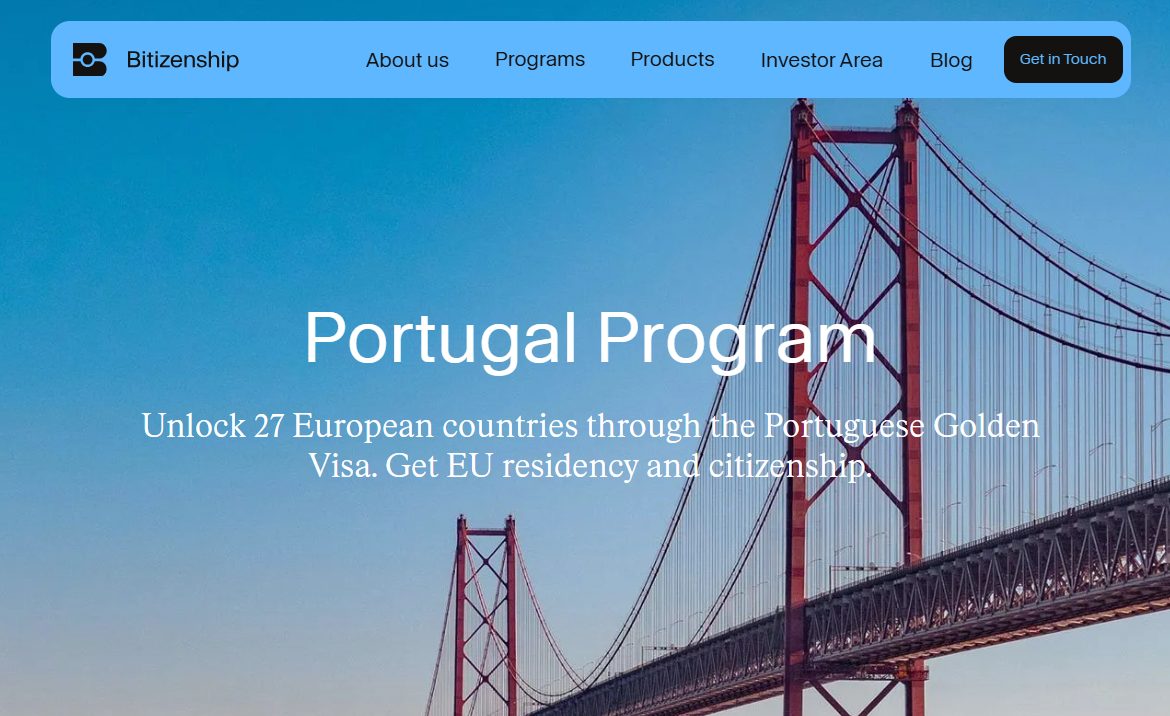
Portugal runs one of the most relocation-friendly residency programs in Europe through its Golden Visa, where a qualifying fund subscription is an eligible investment route under Portuguese rules. The stay requirement is famously light, which is the core reason it attracts investors who want EU access without moving.
Through Bitizenship's Portugal Fund, the route is built around:
- A €500,000 qualifying investment in a Golden Visa-eligible private equity fund focused on Portugal's Bitcoin ecosystem.
- A stay requirement of just 14 days every two years.
- A euro bank transfer for the qualifying capital, which cannot be made in Bitcoin.
- Indirect Bitcoin ecosystem exposure through the activities of the fund's fully owned Portuguese company, not a direct Bitcoin purchase on investors' behalf.
On timelines, five years of residence can lead to permanent residency, with citizenship as a later pathway, subject to the nationality rules in force at the time of application. Following Portugal's 2026 nationality law revision, the citizenship clock is longer and starts from issuance of the first residence card, so investors should treat permanent residency as the near-term goal and citizenship as a subsequent step.
For an investor whose priority is holding EU residency rights without living in Portugal, this remains a powerful combination.
2. Italy
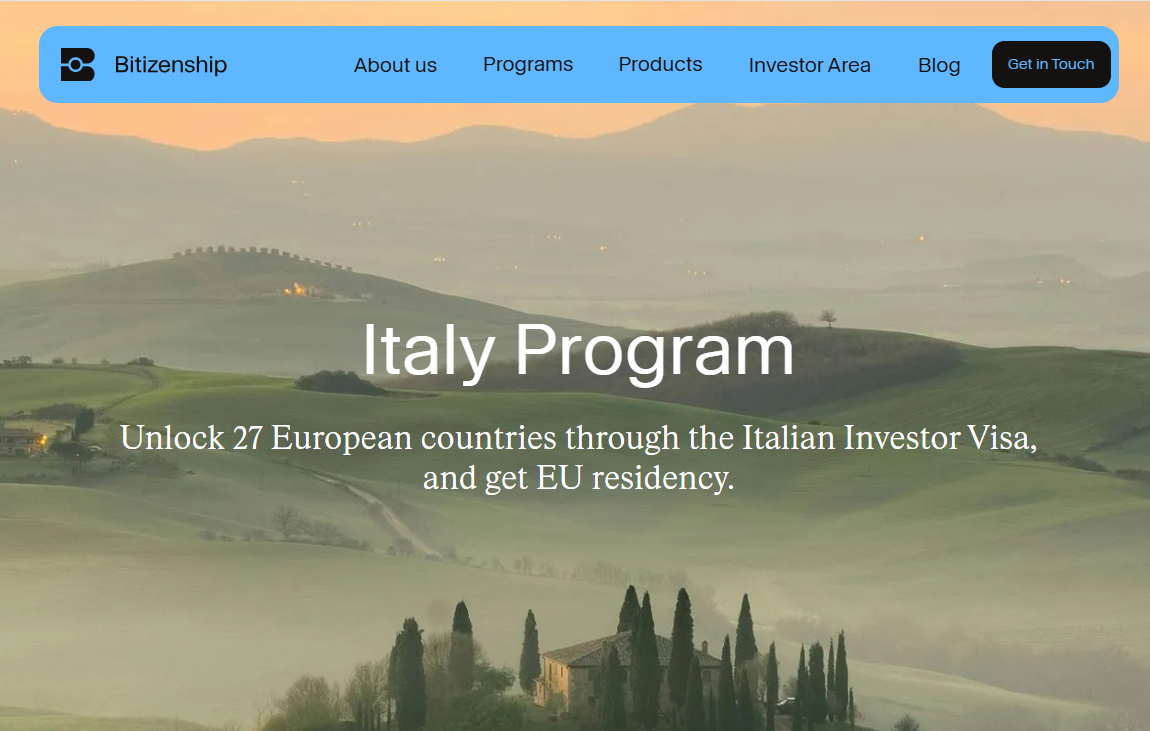
Italy offers something rarer still: a residency route with no minimum stay requirement at all to maintain the permit. Italy's program is officially the Investor Visa, established under Article 26-bis of Legislative Decree 286/1998, and an equity investment in an Italian Innovative Startup is one of its eligible routes.
Bitizenship's Italy's Investor Visa pathway, the Bitcoin Dolce Visa, is structured around:
- A €250,000 equity investment (Class B shares) in Bitizenship Italia S.r.l. (BTC Italia), a Milan-based Innovative Startup focused on the Bitcoin ecosystem.
- Visa approval that comes before any capital is transferred, since the investment is completed only after the Nulla Osta and consular visa are issued.
- Processing that typically completes within 3-6 months.
- No minimum stay requirement to keep the Investor Visa, with an initial two-year permit renewable for three-year periods.
The startup's treasury is held in BTC as working capital and deployed for non-custodial Bitcoin Layer-2 validation and related research, and the company retains ownership of its assets throughout. Investors gain indirect Bitcoin exposure through their equity stake.
Italy is a pure residency-by-investment route: citizenship requires ten years of genuine, continuous legal residence at 183 or more days per year, plus B1 Italian, so the zero-stay flexibility applies to the residency, not to naturalization.
3. Greece
Greece is another EU option that allows you to hold residency without living there. Its Golden Visa has historically carried no minimum-stay obligation to maintain or renew the permit, which makes it attractive for investors who want a Schengen-area base they rarely need to visit.
Key features include:
- Investment thresholds vary by route and location, starting around €250,000 for certain categories and rising to €800,000 for residential property in Athens, Thessaloniki, and popular islands.
- Visa-free Schengen travel and family inclusion.
- A naturalization path that requires roughly seven years of residence, with genuine presence expected for citizenship.
Greece sits among Europe's wealth migration winners for good reason: it keeps real estate as a core route, which suits investors who specifically want property exposure. The trade-off is a higher entry price for the prime locations and a longer, presence-heavy road to a passport.
4. United Arab Emirates
The UAE built its long-term residency around flexibility and tax efficiency rather than a European citizenship endgame. Its Golden Visa grants multi-year residency, and Golden Visa holders are not subject to the older rule that cancelled residency after six months abroad, so the permit can be held with minimal presence.
What makes it distinctive:
- A long-term (typically five or ten year) renewable residence visa.
- No personal income tax, no capital gains tax, and no wealth tax.
- No strict minimum-stay requirement for Golden Visa holders.
- Family inclusion and access to a sophisticated financial hub.
Because crypto and high-net-worth applicants face heavy scrutiny on the origin of their capital, strong source-of-funds documentation matters here as much as anywhere.
The honest limitation is that the UAE is not in the EU or Schengen Area, and it does not offer a realistic naturalization pathway for most investors, so it suits a tax-and-lifestyle objective rather than a European-passport objective.
5. Malta
Malta offers permanent residency with a very light presence expectation through its Permanent Residence Programme, making it a genuine residency-without-relocation option inside the EU.
Headline points:
- Permanent residency rather than a temporary permit, with minimal stay obligations.
- A combination of government contribution plus a property purchase or qualifying rental.
- Schengen-area travel benefits and family inclusion.
Malta also runs a separate, merit-based citizenship route introduced in 2025, which is assessed individually for exceptional contributions rather than offered as a transactional passport program.
For residency purposes, Malta is strong on flexibility; the trade-off is a higher all-in cost than the cheapest EU routes, and the citizenship framework is deliberately selective.
6. Hungary
Hungary re-entered the residency-by-investment market with its Guest Investor Programme, and its standout feature is a long permit with no required physical presence.
Core elements:
- A ten-year residence permit, renewable for a further ten years.
- Qualifying routes such as a real estate fund investment or a donation to a public-interest institution.
- No minimum physical presence requirement to maintain the permit.
- EU and Schengen-area access.
As one of the newer affordable residency options in the EU, Hungary is worth monitoring, though the program is young and its approved fund choices remain limited.
Investors who prioritize a long, low-presence permit will find it compelling, while those focused on a near-term passport should weigh its citizenship timeline carefully.
Residency Without Relocation at a Glance
The six programs differ most on three axes: how much presence they demand, whether they sit inside the EU, and how realistic a passport is at the end.
The table below summarizes the headline structure of each, and you can dig into the specifics through the Italy program FAQs and the country sections above.
The pattern is clear: Italy and Hungary lead on zero-stay flexibility, Portugal pairs a light stay with strong long-term optionality, and the UAE wins on tax while giving up the European-passport endgame.
How Bitizenship Fits In
Across all of these programs, the same pattern holds: the most relocation-friendly residency routes reward investors who structure their move correctly from the start.
Bitizenship focuses on the two European destinations that combine flexibility, compliance, and genuine long-term optionality, Portugal and Italy, and builds each route specifically for Bitcoin-aligned investors who do not want to separate their mobility strategy from their worldview.
That focus shows up in the structure of the Bitcoin Dolce Visa and the Portugal Fund:
- Portugal: a Golden Visa-eligible private equity fund with a 14-days-every-two-years stay model.
- Italy: an Investor Visa startup-equity route with no minimum stay to maintain the permit.
- Both: indirect Bitcoin ecosystem exposure through the investment vehicle, founder-led oversight, and vetted legal and tax partners.
As co-founder Alessandro Palombo, Co-Founder of Bitizenship puts it:
"Italy's investor visa is the most underrated residency program in Europe. €250,000. Residency in 3-6 months. Indefinitely renewable. Zero stay requirement. Immediate Schengen access. The people ignoring it now will be the ones wishing they hadn't."
The right choice depends on your goals: minimal-presence EU residency with a longer citizenship horizon points toward Portugal, while speed, the lowest entry point, and zero stay obligations point toward Italy.
Conclusion
Residency without relocation is no longer a niche idea; it is how a growing share of investors approach mobility, security, and long-term optionality.
Portugal and Italy lead for flexibility inside the EU, Greece keeps real estate on the table, the UAE wins on tax and lifestyle, and Malta and Hungary round out the low-presence options, each with its own trade-offs on cost, stay rules, and citizenship timelines.
The common thread is that residency and citizenship follow different rules, and the smartest applicants plan for both from day one.
For Bitcoin-aligned investors who want a compliant route that preserves exposure to the asset they believe in, Bitizenship structures exactly this kind of pathway in Portugal and Italy.
Get in touch to explore which residency-without-relocation route fits your goals.
Read Next:
- Best Residency-by-Investment Programs for Americans with Crypto Wealth
- Which European Countries Are Most Crypto-Friendly for New Residents?
- Best Alternatives to Buying Real Estate for EU Residency
FAQs:
1. Which countries allow residency without relocation in 2026?
Several countries allow residency without relocation, meaning you can hold a legal residence permit without living there full-time. In Europe, Portugal asks for only 14 days every two years, Italy requires no minimum stay to maintain its Investor Visa, and Greece and Hungary also offer flexible presence rules, while the UAE and Malta provide low-presence options outside and inside the EU respectively. Bitizenship focuses on Portugal and Italy, structuring compliant residency-without-relocation routes for Bitcoin-aligned investors.
2. Does residency without relocation lead to citizenship?
Residency without relocation can lead toward citizenship, but the citizenship stage usually has stricter rules than the residency stage. Most programs require genuine, continuous physical presence and language proficiency for naturalization, even when the residency permit itself demands little or no presence. Bitizenship frames Portugal as a five-year pathway to permanent residency with citizenship as a later step, and Italy as residency-by-investment where citizenship requires ten years of continuous legal residence at 183 or more days per year.
3. Is residency without relocation legal and compliant?
Residency without relocation is legal when it runs through an official government program and a properly structured qualifying investment. Each route is governed by national law, such as Italy's Investor Visa under Article 26-bis of Legislative Decree 286/1998, and all involve source-of-funds verification. Bitizenship structures its Portugal and Italy routes to follow these rules, with euro-denominated qualifying investments, founder-led legal oversight, and vetted legal and tax partners, while outcomes always remain subject to the relevant requirements.
4. Which residency without relocation program has the lowest stay requirement?
Among major residency-without-relocation programs, Italy's Investor Visa stands out because it has no minimum stay requirement to maintain the permit. Portugal is close behind at 14 days every two years, and Hungary's Guest Investor Programme also requires no physical presence. Bitizenship offers both the Italian and Portuguese routes, so investors can choose between zero-stay flexibility in Italy and a light-stay, longer-optionality structure in Portugal based on their objectives.
5. Can Bitcoin holders get residency without relocation?
Bitcoin holders can pursue residency without relocation through the same programs available to other investors, provided their capital is documented and transferred in compliant fiat form. Bitizenship designs its routes specifically for this audience: the Bitcoin Dolce Visa in Italy and the Portugal Fund both offer indirect Bitcoin ecosystem exposure through the investment vehicle, while the qualifying capital itself moves by euro bank transfer rather than in Bitcoin, keeping the structure compliant with immigration rules.
Disclaimer:
This article is published by Bitizenship for informational and educational purposes only. It reflects Bitizenship's perspective on the investment migration market and is not intended as legal, tax, immigration, investment, or financial advice, nor as an offer or solicitation to subscribe to any investment product. Comparisons with other firms are based on publicly available information and our own assessment of structural differences in business models. We have aimed for accuracy, but descriptions of programs, regulations, and competitor offerings are necessarily summaries and may not capture every legal nuance. Program terms, eligibility criteria, processing times, tax regimes, and regulatory frameworks change frequently and vary by individual circumstances. The Bitcoin Dolce Visa involves an equity investment in Bitizenship Italia S.r.l., an Italian private company. Any investment decision should be made only after reviewing the official documentation and consulting independent legal, tax, and financial advisors qualified in the relevant jurisdictions. Past performance does not guarantee future results. Capital is at risk. Residency and citizenship outcomes depend on meeting all legal, language, residency, and integration requirements set by the relevant authorities and are never guaranteed. Always refer to official government and regulatory sources, and engage qualified professionals before acting on any information in this article.

Gain European residency and citizenship for you and your family. Enjoy the freedom to live, work, do business.
