Where Americans Are Moving in Europe, and Where They Actually Thrive
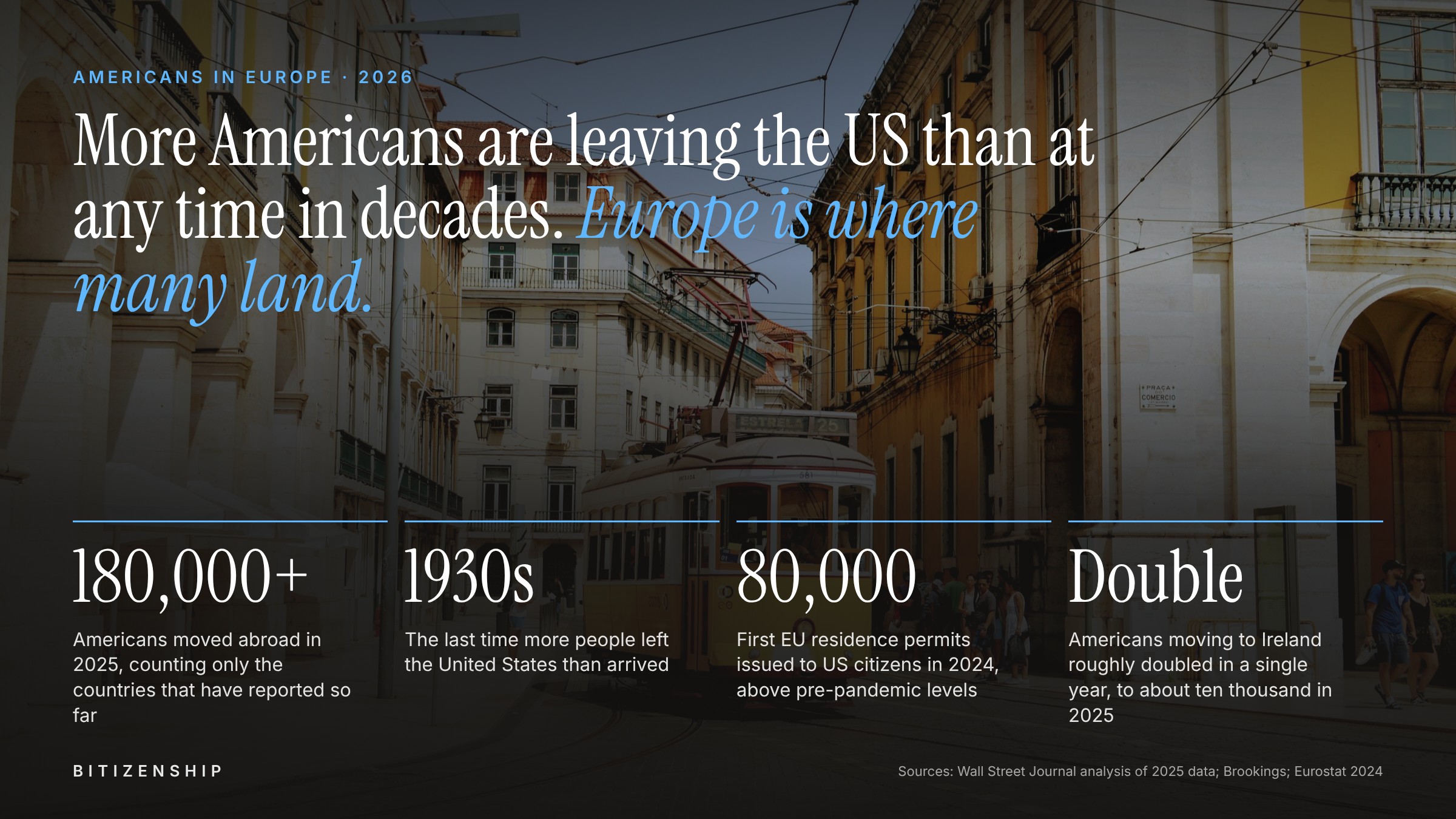
At least 180,000 Americans moved abroad in 2025. That figure only covers the countries that had published their data when the Wall Street Journal ran its count, as reported here, so the real number is higher.
For the first time since the Great Depression, more people left the United States than arrived. The Brookings Institution reached a similar conclusion: net migration turned negative in 2025, for the first time in at least half a century.
A large part of them came to Europe.
From our offices in Portugal, we have watched this wave land for years. Every week we speak with Americans at some stage of the move: thinking about it, halfway through it, or already here and wondering whether they picked the right place.
This is the short version of what we tell them. Where Americans are actually going, why they go, and which choice tends to fit which person.
Where Americans are going: the data
The most reliable picture comes from residence permits, because every non-EU citizen who stays longer than a few months needs one.
In 2024, just over 80,000 US citizens received a first residence permit in the EU, according to Eurostat figures reported by The Local. That's more than before the pandemic. The single biggest reason was study, which tells you something: a good part of this wave is young.
The countries holding the most permits for Americans are the ones you'd guess: Germany, Spain, France, Italy, the Netherlands, Switzerland and Portugal, according to Spain's Permanent Immigration Observatory, as reported by the Boston Globe.
A few movements stand out.
- Ireland. Americans moving there roughly doubled in a single year, to about ten thousand in 2025, according to Ireland's Central Statistics Office, as reported by the Irish Post. Americans are also getting Irish passports at a record pace.
- Spain, the Netherlands and the Czech Republic. The American population in each has roughly doubled over the last decade.
- Portugal. The one everyone talks about. It grew faster than almost anywhere after the pandemic, and it's also the place where we now see the most people reconsidering.
- Italy. Fewer arrivals than Spain or Portugal, but a different profile: older, wealthier, and increasingly in Milan.
Why they're leaving, and why Europe
The headlines say politics. Some of it is, on both sides. But most of what we hear on calls is quieter than that.
The money goes further. This is the core of it. Our advice to Americans is simple: earn in dollars, spend in euros. A US salary, a pension or a portfolio, spent in a country where a sit-down lunch costs fifteen euros and the hospital doesn't send you a bill.
Remote work made the income portable. Ten years ago, moving meant giving up your American job. Today a lot of people keep it.
Healthcare and schools. For a retiree, the question is the hospital. For a family, it's the school. Both are cheaper here, and in many places better.
Depth. You can rebuild Singapore's efficiency anywhere with good infrastructure and good internet. You can't rebuild two thousand years of history that you walk past on the way to the bakery.
Optionality. A growing group isn't leaving at all. They want a door that stays open: a European residence permit in the drawer, in case the political pendulum swings somewhere they don't like.
Ten places where Americans actually thrive
"Which country is best for Americans" is the wrong question. A Californian and a New Yorker often want opposite things, and a retiree, a remote worker and a family with kids in school each need a different country.
There are also two schools of thought. One goes for the second city: Porto over Lisbon, Valencia over Barcelona, and gets half the price and more local life for it. The other goes for the famous place because it was always the dream. We lean toward the first school, and so does this list.
Here is the short version of the map: ten places where the Americans we work with are happy, each tagged with who it's for. The full version, with rents, visas and the fine print for each place, is on our co-founder Alessandro Palombo's newsletter.
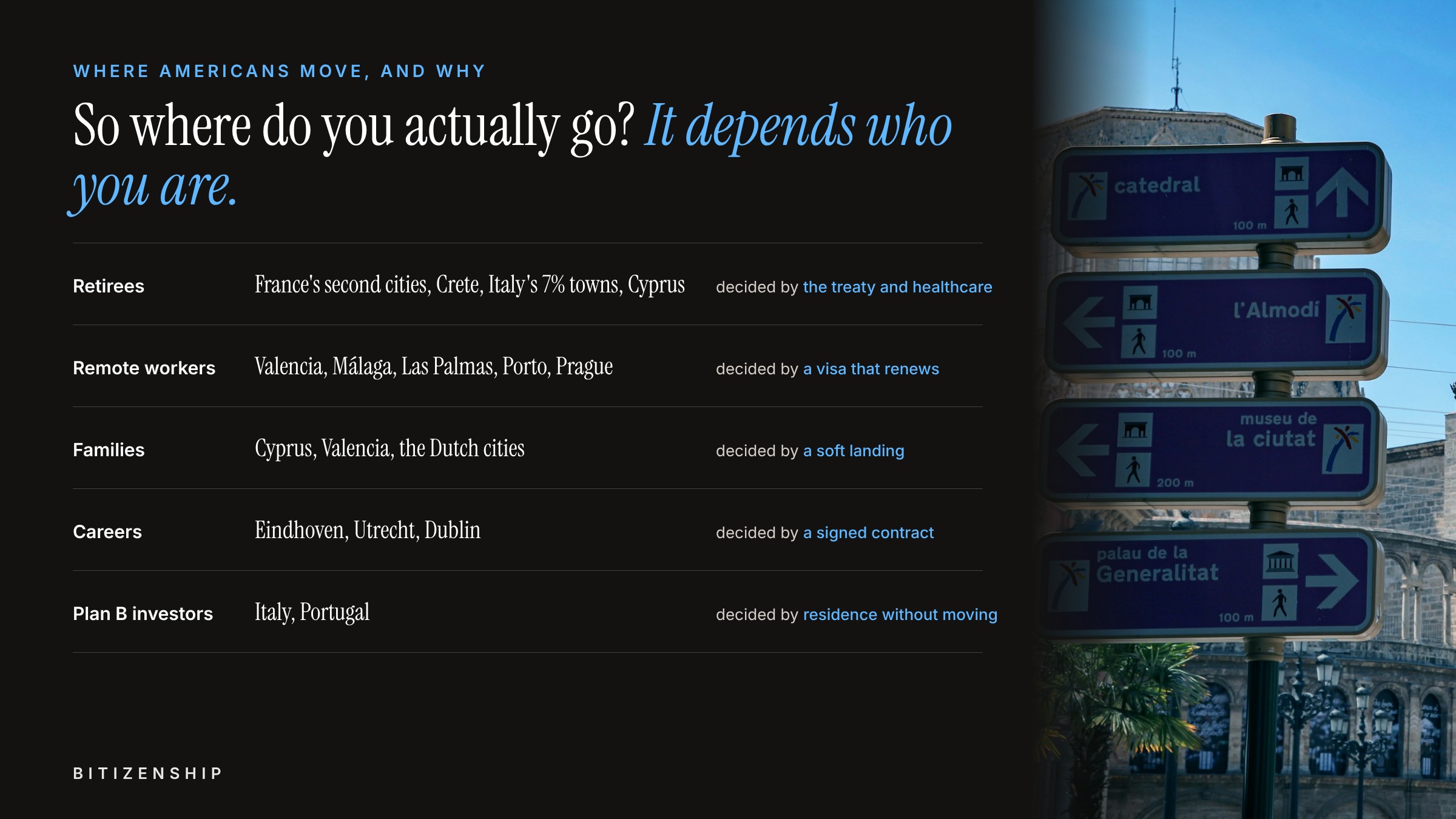
Two profiles cut across the list. Families tend to land well in Cyprus or Valencia, for safety, space and a soft landing in English, or in the Dutch cities when a job is paying the way. Careers are the hardest case: most careers are still stronger in the US. Inside the EU, the realistic options are Eindhoven or Utrecht with a signed contract and housing sorted, or Dublin if a big tech employer is footing the bill.
1. Lyon, Toulouse, Montpellier: France's second cities
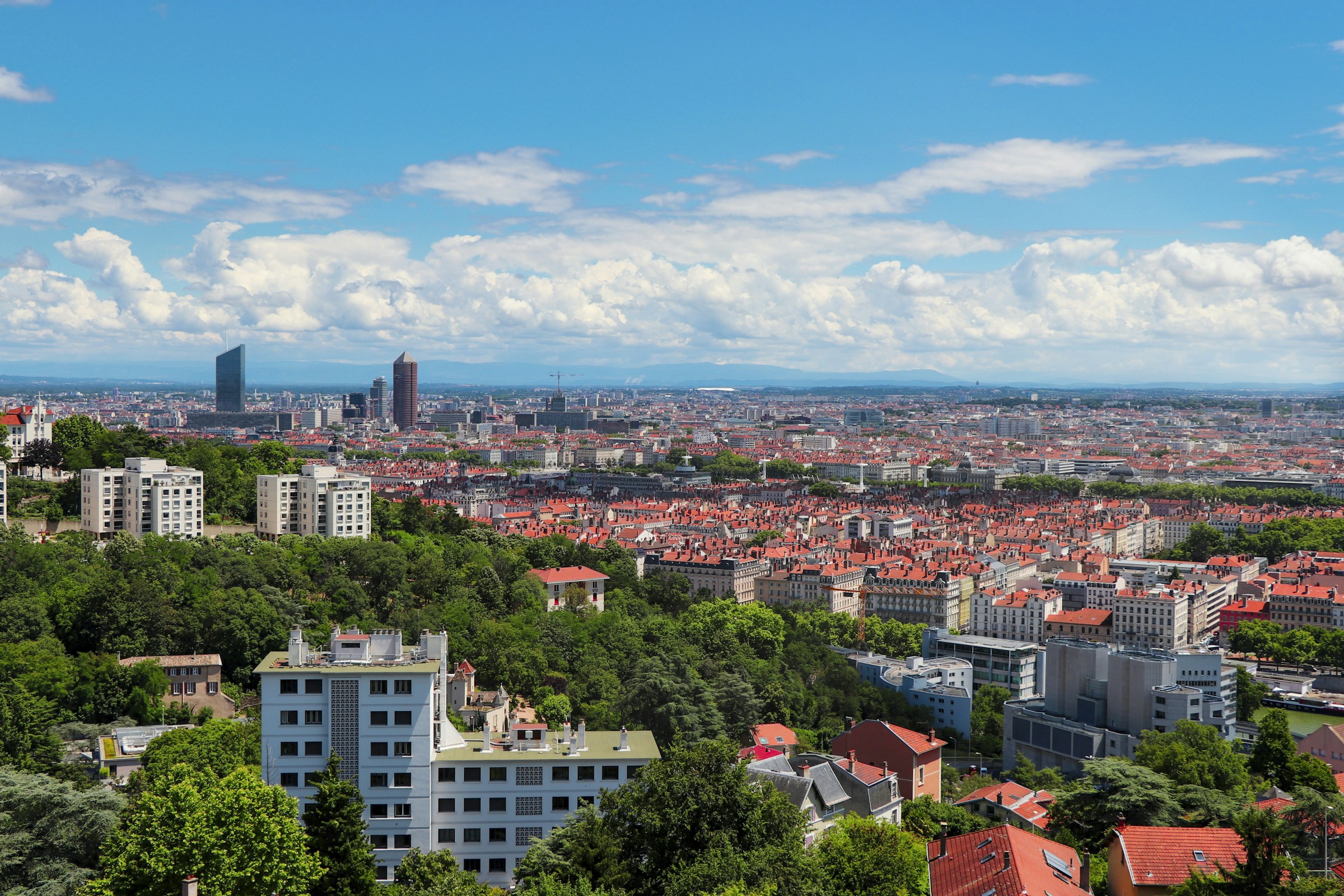
Best for: retirees and Americans with significant assets.
For Americans, the US-France tax treaty is the best one there is. Social Security, 401k and IRA withdrawals, even the Roth, are taxed by the US and left alone by France. The long-stay visitor visa needs no job. Even the French are moving back to the south, and when locals choose a place on purpose, it's worth paying attention.
The catch: you have to learn French. Outside the big international employers, nobody switches to English for you.
2. Valencia

Best for: remote workers who rent and keep their money simple.
Walkable, Mediterranean, a beach in the city, a long green park where the river used to run, and still affordable. For an American it's an unusually easy landing.
The catch: for Americans with assets, Spain's fine print is the worst on this list. It doesn't honor the Roth, Valencia keeps its regional wealth tax, and a yearly form asks you to declare what you own around the world.
3. Málaga
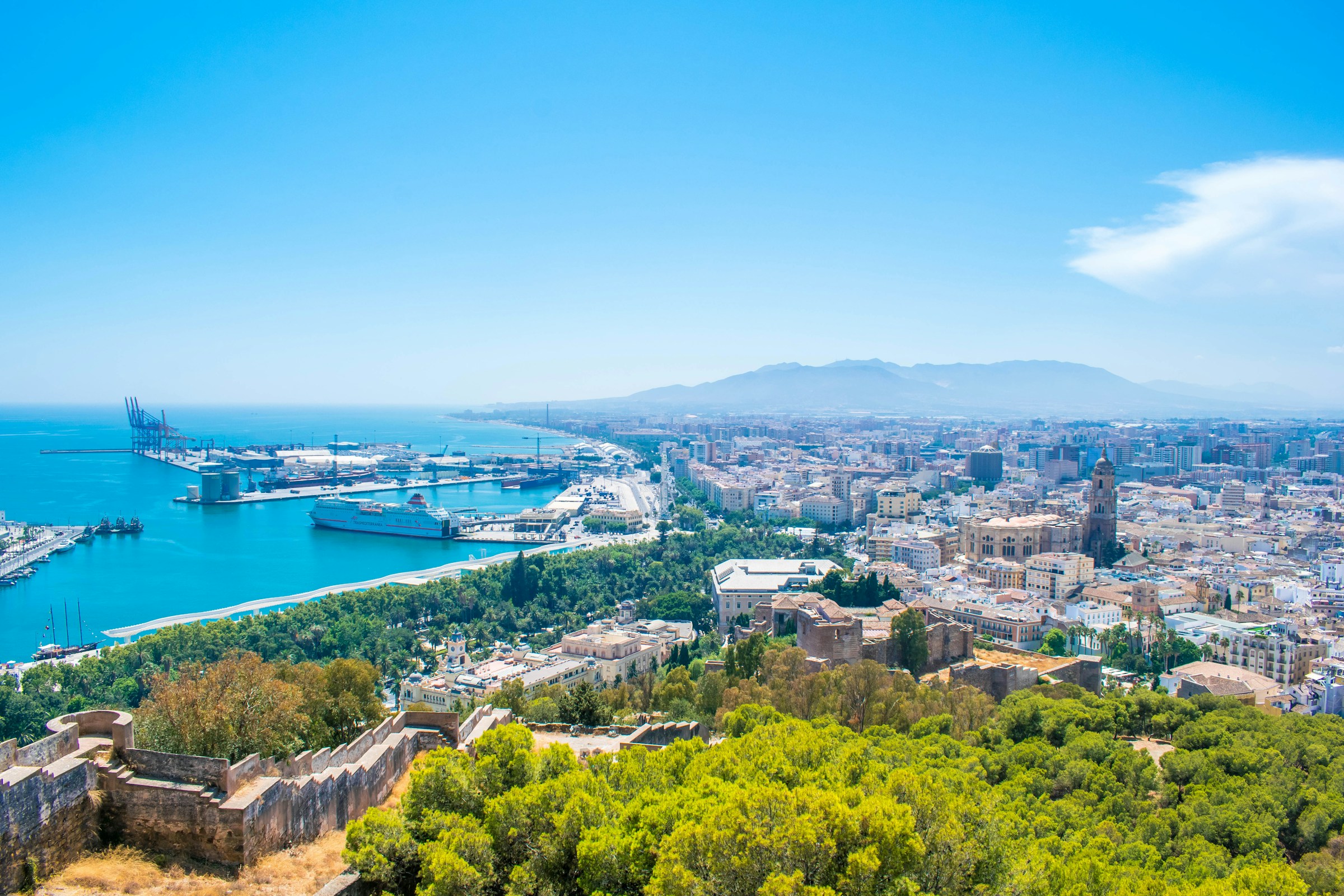
Best for: remote workers and retirees who want sun and a kinder tax bill.
The expats here are consistently happy, and many say they felt at home within weeks. Málaga sits in Andalusia, which scrapped its wealth tax entirely.
The catch: rents are rising fast and August is brutally hot. The warmth is real, but the Spanish you bring is what turns it into friendships.
4. Braga, Porto and the coast nearby

Best for: remote workers who want real Portugal, not Lisbon prices.
Porto is smaller, colder and more authentic than Lisbon, with better architecture and incredible food. The coast at Matosinhos and Foz gives you the ocean ten minutes from the center. Braga is the quieter pick, a young university town where rents never went insane.
The catch: Porto is small, and Braga speaks less English. That's the price of a place that is still properly Portuguese.
5. Crete
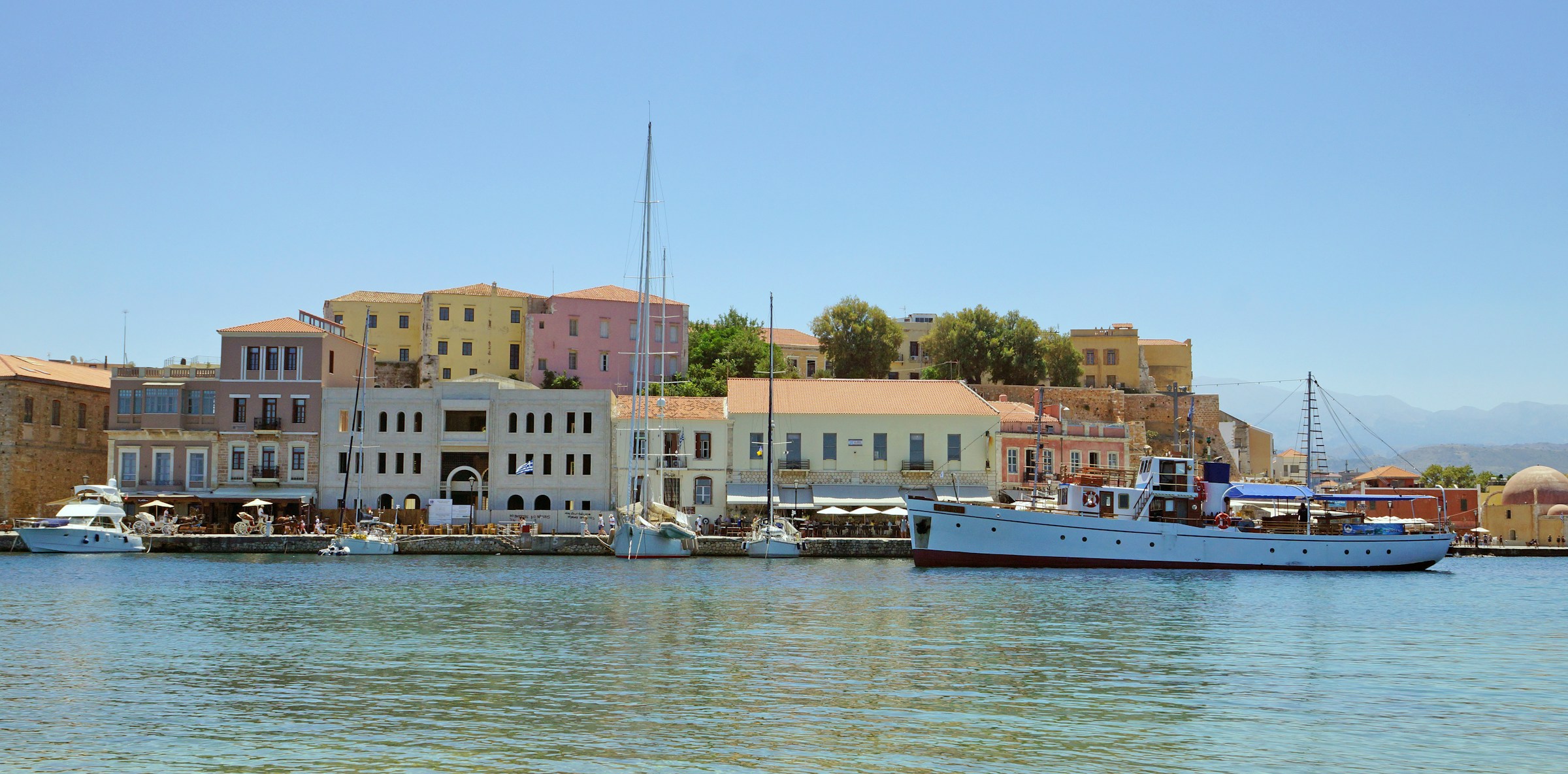
Best for: retirees who want a long flat-tax regime and a community already there.
Greece taxes foreign pensions at a flat 7%, and the regime lasts fifteen years. Chania has an American community that goes back decades, partly because the US Navy has been at Souda Bay since 1969.
The catch: Greek bureaucracy, healthcare that thins out once you leave the cities, and the fact that it's an island.
6. Las Palmas, Canary Islands

Best for: digital nomads chasing the best climate in the world.
Las Palmas is often ranked as having the best year-round climate on Earth: a mild, permanent summer with a city beach you can swim in through the winter. Spain's nomad visa renews and leads to permanent residence, so it's a life, not just a winter escape.
The catch: all of Spain's tax fine print follows you, and the English-speaking nomad bubble makes it easy never to leave it.
7. Prague and Brno

Best for: the self-employed and working-age. Not retirees.
Safe, well run, with world-class transit and a real American network that goes back to the early nineties. The Czech freelance license is one of the few genuine doors in Europe for someone self-employed.
The catch: a non-working retiree has to buy private health cover, which gets expensive and hard to find later in life. The winters are long and grey.
8. Italy's 7% towns
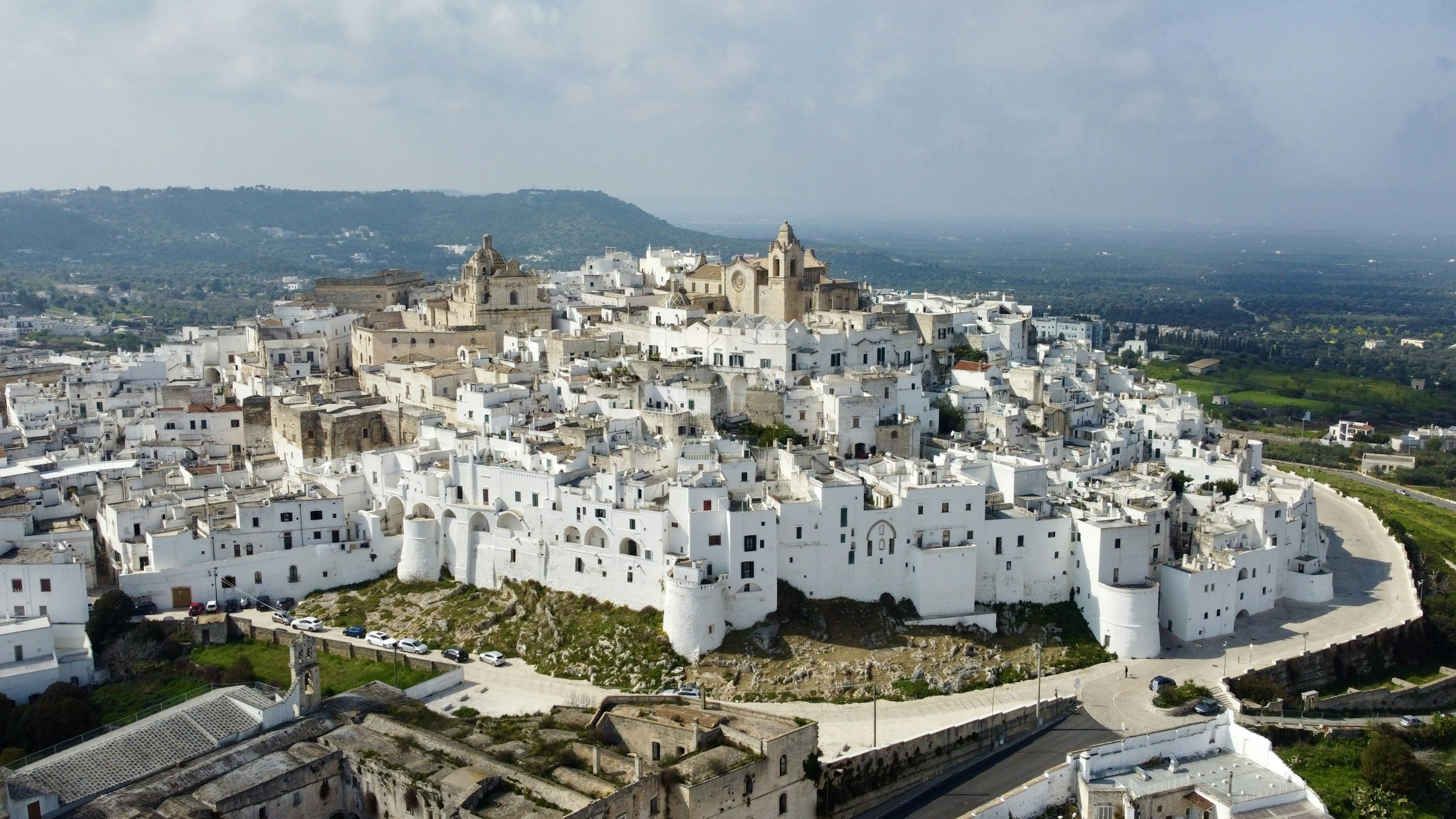
Best for: retirees on passive income ready to go all in.
Pensioners who move to a small town in the south, or in parts of central Italy, pay a flat 7% on foreign income. The town needs fewer than thirty thousand people when you arrive, and the regime lasts ten years. For an American, the US taxes you first, so the real gain is escaping Italy's progressive rates and its reporting on foreign assets. Think Ostuni, the Abruzzo coast or the area around Cagliari: real towns with hospitals and train stations.
The catch: almost nobody speaks English, and Italian isn't optional. It's the deepest plunge on this list.
9. Cyprus
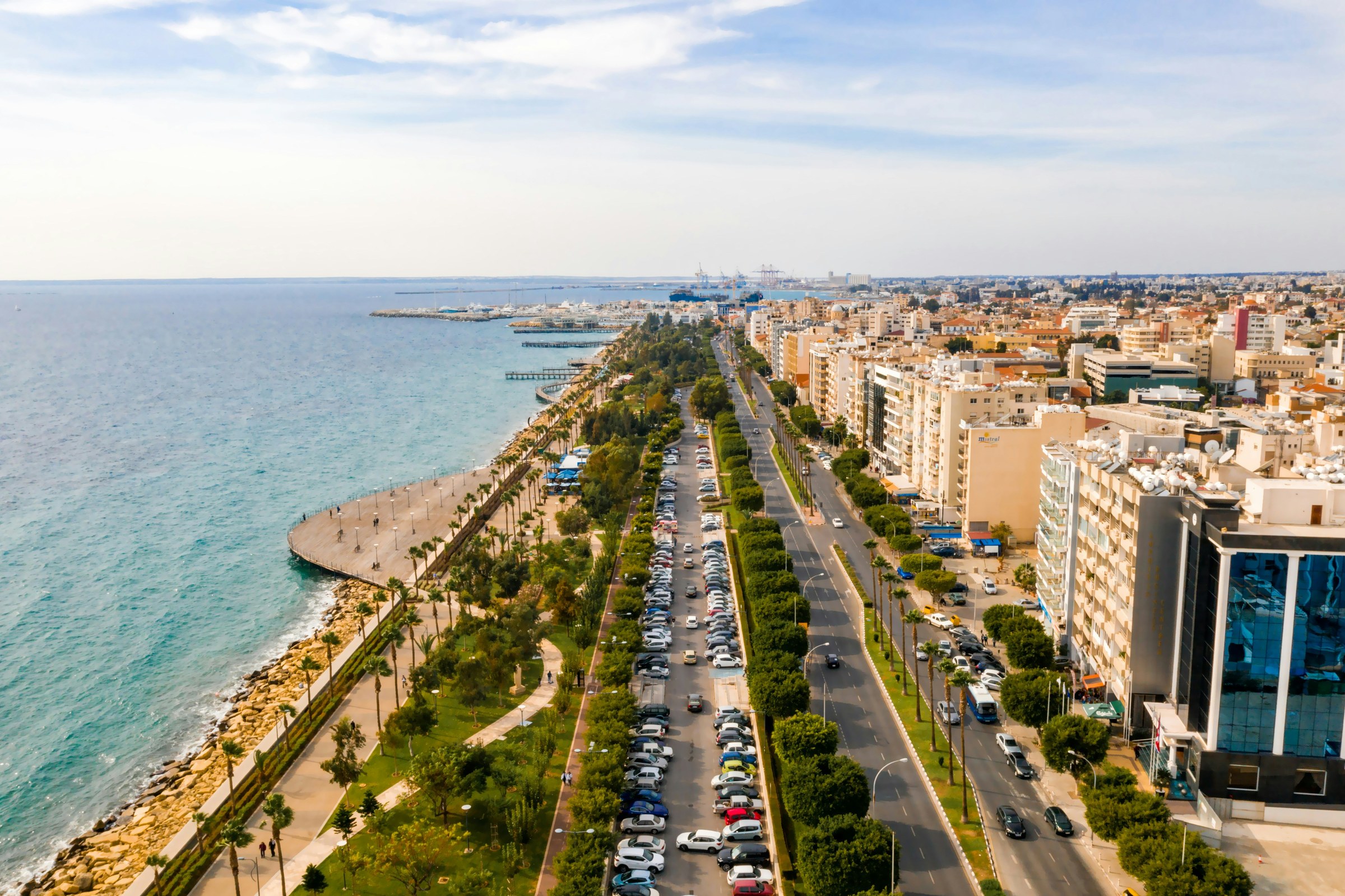
Best for: retirees who want a full life in English.
English is everywhere, the sun shines most of the year, and foreign pensions are taxed at a flat 5%. In the big annual expat survey, Cyprus ranked among the happiest places for foreigners.
The catch: there's no social security agreement with the US, Limassol has become expensive, and mainland Europe is always a flight away.
10. Eindhoven and Utrecht
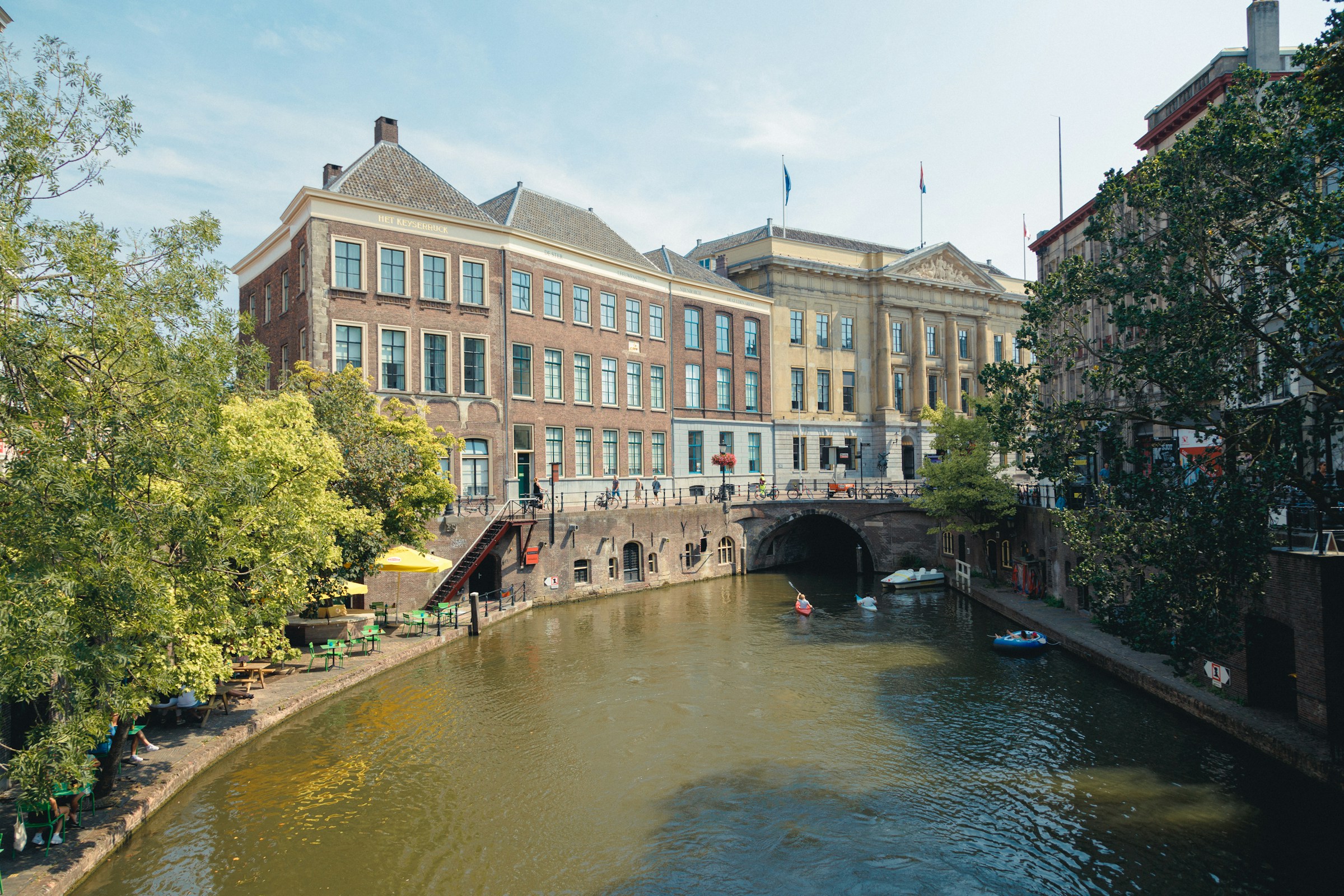
Best for: salaried tech workers with a signed contract. Not freelancers or retirees.
With a sponsored tech job, the Dutch 30% ruling lets part of your salary arrive tax-free, and English is the working language. Eindhoven is growing fast around its tech campus. Utrecht is the calmer option.
The catch: housing first, so make the employer sort it before you sign. Then watch the Dutch tax on capital, which is moving toward taxing paper gains.
The dream cities that disappoint
None of these are bad. They're just badly matched to what most Americans say they're leaving for.
Lisbon. It's a trap if you came for cheap Europe on a local salary. At this point, Porto is the better choice: more authentic, better value, and the ocean ten minutes from the center.
Paris. A dream to visit, hard to live in: tiny, expensive apartments and paperwork the French themselves complain about. If you want the French treaty, take it to Lyon.
Berlin. Germany ranks near the bottom for making friends, and after 55 it's very hard to get back into public health insurance. It works for one person: the young salaried tech worker.
Want the long version? Rents, visas and every catch for each place are in the full piece on Alessandro Palombo's newsletter.
The mistakes that send Americans home
A good number of Americans who move will be back within two years, tens of thousands of dollars lighter. The reasons are almost always the same.
1. The visa leads nowhere. Some visas are really a long holiday with a tax number. Before you choose a country, check whether the visa renews and leads to permanent residence, or simply runs out.
2. The 401k gets taxed as salary. The United States taxes its citizens wherever they live, so the tax treaty matters more than the rent. Run your retirement accounts past someone who knows the specific treaty before you move, not after.
3. They've never seen the place in February. Summer sells the move. February decides whether you stay. Spend a winter there first, and check that the foreigners you met in July are still around.
4. They try to fix Europe. An American spends a year in Portugal or Italy, decides the locals don't know how to run things, and opens the sports club or buys the vineyard. It almost never works. Europe runs on a different logic, and you don't get to skip the years it takes to learn it. Live here first, and keep your income where the economy still works the way you understand.
Then there's the bill that follows you home. Medicare stops at the border. Your US tax filing never does. And the institutions most likely to shut you out for being an American abroad are usually American ones: your own bank and your own brokerage.
Where an investor visa fits
Most Americans don't need an investor visa. If you're retiring on a pension, working remotely or holding a grandparent's passport, there's a cheaper door for you.
There's one more group, though, and it's the one we work with most at Bitizenship: founders, investors, Bitcoin holders, people who've sold a company. Many of them aren't ready to move full-time, or don't want to. They want a door that stays open, without depending on a salary, a pension or a minimum number of days on the ground.
An investor visa makes sense when you want a European residence permit that doesn't depend on your type of income, and doesn't force you to move full-time. Two programs stand out right now.
The Italy Investor Visa
The Italy Investor Visa startup route requires a €250,000 equity investment in an Italian Innovative Startup.
- You invest after you're approved. Capital moves only once the Nulla Osta and the consular visa are issued.
- No minimum stay. You don't have to spend a set number of days in Italy to keep and renew the permit.
- It keeps renewing. The first permit lasts two years. It then renews in three-year periods, for as long as the investment stays in place.
- Family included. Spouse, children and dependent parents can be part of the application.
- Timeline. Demand is at record levels, so in current conditions we'd budget six to nine months.
The long road is there too. Permanent residence may be available after five years. Citizenship eligibility comes after ten years of legal residence, subject to B1 Italian, integration and other requirements. Both require genuine time in Italy, which a permit alone doesn't give you.
The Portugal Golden Visa
Since real estate was removed, Portugal's Golden Visa for most investors means a qualifying fund. The investment is €500,000.
- Minimal presence. Fourteen days every two years.
- Permanent residence after five years, counted from the first residence permit, subject to A2 Portuguese and other requirements.
- Slow start. With current AIMA delays, the biometrics appointment comes eleven to fifteen months after you apply, and the first residence permit roughly two years after, sometimes more.
- Citizenship has moved. Since May 2026, it takes ten years of legal residence from the first permit. Portugal is no longer a fast passport. Its strength is permanent residence with very little presence.
How Bitizenship runs these routes
At Bitizenship we run both routes end to end, with administrative support and a network of vetted lawyers and tax advisors. For investors who also want exposure to the Bitcoin ecosystem through the same vehicle, we structured two programs.
The Bitcoin Dolce Visa is a €250,000 Class B equity investment in Bitizenship Italia S.r.l., a startup company, not a fund. Its treasury is held in Bitcoin as working capital and deployed for non-custodial Bitcoin Layer-2 validation. The company retains ownership of its assets and does not lend its Bitcoin holdings. Investors gain indirect exposure to Bitcoin through equity in an Italian Bitcoin startup. More information is available on the official Bitizenship Italia website.
The Bitcoin Ecosystem Golden Visa is a Golden Visa-eligible private equity fund that invests in a fully owned Portuguese company focused on the Bitcoin ecosystem. Investors gain exposure to Bitcoin through the company's activities. More information is available on the official Bitizenship Capital website.
In both cases, the investment is made in euro through compliant banking rails, not in Bitcoin.
One point Americans often miss. Holding a European residence permit and being tax resident in that country are two different things, and as a US citizen you file with the IRS either way. How the permit interacts with your taxes depends on how much time you spend there and how your income is structured. That's worth a conversation before you choose.
If you want to understand which route fits your situation, you can book a free consultation.
Going deeper
This article is the overview. The ten places above are covered in more depth in a free piece on Alessandro Palombo's newsletter, The Ale's Letter. For paid subscribers, he also wrote a much longer guide, Where Americans Actually Thrive in Europe: the 2026 guide. It covers twenty-seven places, from the obvious ones to the ones almost nobody looks at, each tagged for the profiles above, plus the treaties, the visas, healthcare and the costs nobody budgets for.
The bottom line
Americans are moving to Europe in numbers we haven't seen before. The ones who thrive rarely end up in the famous city. They end up in Lyon instead of Paris, Porto instead of Lisbon, a small town in Puglia instead of Rome.
They picked by profile, checked that their visa actually leads somewhere, ran their retirement accounts past the treaty, and spent a February there before signing a lease. Most of all, they kept their income in America: they earn in dollars and spend in euros.
Pick the profile first. The country follows.
Key takeaways
- At least 180,000 Americans moved abroad in 2025, and for the first time since the 1930s more people left the US than arrived.
- Just over 80,000 Americans received a first EU residence permit in 2024, with Germany, Spain, France, Italy, the Netherlands, Switzerland and Portugal holding the most.
- The right place depends on your profile. Retirees tend to thrive in France's second cities, Crete, Italy's 7% towns and Cyprus. Remote workers do well in Valencia, Málaga, Las Palmas, Porto and Prague. Families land well in Cyprus and Valencia.
- The dream cities, Lisbon, Paris and Berlin, often disappoint the Americans who chose them for a cheaper, simpler life.
- The most common mistakes are a visa that leads nowhere, a 401k taxed as salary, never having seen the place in winter, and trying to fix Europe on day one.
- Investor visas suit people who want a European residence permit without moving full-time. Italy's startup route starts at €250,000, with no minimum stay. Portugal's fund route starts at €500,000, with fourteen days of presence every two years.
FAQs
What is the most popular European country for Americans?
By residence permits, Germany, Spain, France and Italy hold the most. Among people moving for lifestyle rather than study or work, Portugal and Spain are the most common choices, with Ireland growing fastest in 2025.
What is the best European city for American retirees?
There's no single answer, but France's second cities stand out for the tax treaty, Crete and Italy's small southern towns for their flat taxes on foreign pensions, and Cyprus for a full life in English.
What is the easiest way for an American to move to Europe?
It depends on your income. A pension or passive income points to visas like Spain's non-lucrative, Portugal's D7 or Italy's elective residence. A remote salary points to a digital nomad visa. A European parent or grandparent may give you citizenship directly.
Do Americans still pay US taxes if they move to Europe?
Yes. The United States taxes its citizens wherever they live. The tax treaty between the US and your new country decides how double taxation is avoided, which is why it matters so much.
Does the Italy Investor Visa require me to live in Italy?
No. There is no minimum stay to keep and renew the investor visa. Permanent residence and citizenship do require genuine time in Italy.
Is the Bitcoin Dolce Visa a Bitcoin fund?
No. It is a €250,000 equity investment in Bitizenship Italia S.r.l., a Milan-based Innovative Startup. Bitcoin exposure is indirect, through the company's activities, and the investment is made in euro.
Does the Portugal Golden Visa require me to live in Portugal?
No. You need fourteen days in Portugal every two years to keep the permit. Permanent residence and citizenship come with their own residence and language conditions.
Can I still get a Portugal Golden Visa by buying property?
No. Real estate no longer qualifies. For most investors, the route is a €500,000 investment in a qualifying fund.
When can I get permanent residence or citizenship in Portugal?
Permanent residence is available five years after the first residence permit, subject to A2 Portuguese. Since May 2026, citizenship requires ten years of legal residence, counted from the first permit, not from the date you invest.
Is the Bitcoin Ecosystem Golden Visa a Bitcoin fund?
No. It is a private equity fund that invests in a Portuguese company focused on the Bitcoin ecosystem. Investors gain exposure through the company's activities, and the investment is made in euro.
Does a Golden Visa or Investor Visa guarantee citizenship?
No. Both are residency pathways. Citizenship eligibility depends on years of legal residence, language, integration, a clean criminal record and other legal requirements, and is never automatic or guaranteed.
Disclaimer:
This article is published by Bitizenship for informational and educational purposes only and is not legal, tax, immigration, investment or financial advice, nor an offer or solicitation to subscribe to any investment product. Program terms, eligibility criteria, processing times and tax regimes change frequently and vary by individual circumstances. The Bitcoin Dolce Visa involves an equity investment in Bitizenship Italia S.r.l., an Italian private company. The Bitcoin Ecosystem Golden Visa involves an investment in a private equity fund. Startup risk applies to the Bitcoin Dolce Visa and private equity risk to the Bitcoin Ecosystem Golden Visa: liquidity is limited, distributions are not guaranteed, and capital can be lost. Review the official documentation and consult independent legal, tax and financial advisors before making any decision. Past performance does not guarantee future results. Residency and citizenship outcomes depend on meeting all legal, language, residency and integration requirements and are never guaranteed.
Photo credits: the photos in this article are from Unsplash, by Nick Karvounis (Porto), Aayush Gupta (Lisbon), Jonas Smith (Florence), Tamara Malaniy (Valencia street signs), Bastien Nvs (Lyon), Northleg (Valencia), Chris (Málaga), Krzysztof (Braga), Martti Salmi (Chania), Yury Chernov (Las Palmas), Dmitry Goykolov (Prague), Luca Dimola (Ostuni), Getty Images via Unsplash+ (Limassol), Uitbundig (Utrecht) and Calin Stan (Cascais). Thank you to the photographers.
Let’s keep in touch.
Every so often, a letter from us on new residencies, new citizenships and a freer way to live.
