Best Countries for Expats in 2026, Ranked for Mobility, Tax, and a Path to Citizenship
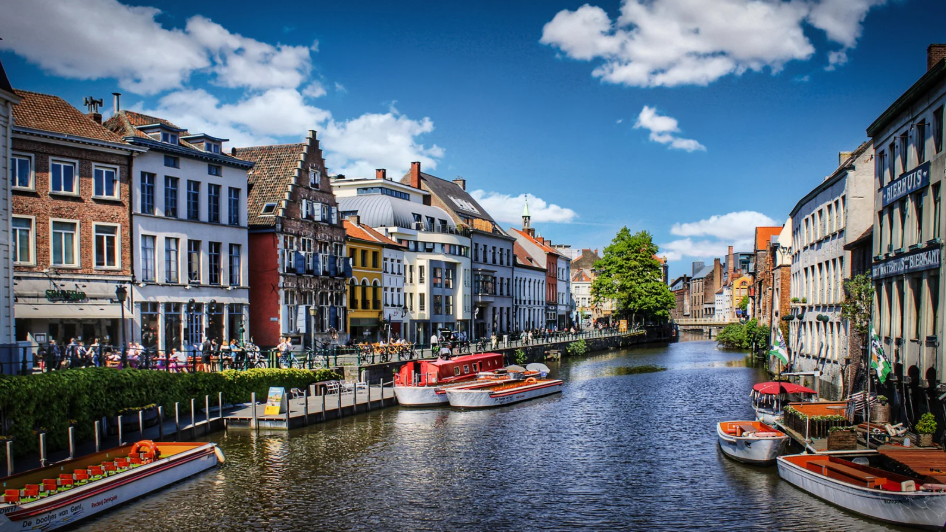
The best countries for expats in 2026 are not the ones that win friendliness surveys, they're the ones where the years you spend actually convert into something permanent.
In 2024, EU countries granted citizenship to close to 1.2 million people living on their territory, a 12% increase over 2023 (Source: Eurostat).
That number is the real scoreboard. It measures conversion, not vibe. Plenty of countries are wonderful to live in and structurally incapable of ever making you one of their own, and most expat rankings never mention it.
This ranking scores ten destinations on seven criteria that decide whether a move becomes an asset or an expensive rental agreement.
Bitizenship builds residency pathways in Portugal and Italy for exactly this reason: the endgame matters more than the first year.
Key Takeaways
- The best countries for expats in 2026 are ranked here on optionality, not lifestyle satisfaction.
- Mexico, Thailand, and the UAE are excellent to live in, difficult to naturalize in.
- Portugal's naturalization clock moved to 10 years on 19 May 2026.
- Italy's Investor Visa needs no stay, but citizenship demands 183+ days a year.
- Bitizenship structures two EU routes: a Portuguese fund and an Italian startup.
How This Ranking Scores Countries
Most expat indexes measure how people feel after they arrive. That's useful for choosing a neighborhood and useless for choosing a jurisdiction. This ranking scores each country on seven things that are either written into law or verifiable in the data.
- Visa access: how many realistic legal routes exist for a non-EU applicant with capital or remote income.
- Tax: whether a defined regime exists for new residents, and what it actually covers.
- Healthcare: whether residents get real access to a functioning public system.
- Safety: stability you'd be comfortable committing a decade to.
- English: how far you get before the language becomes a hard constraint.
- Citizenship clock: the legal residence period before naturalization, and what physical presence it demands.
- Dual-citizenship policy: whether you keep your original passport or trade it in.
The last two criteria carry the most weight here, because they're the ones that can't be fixed later. You can learn a language, hire a tax advisor, or move cities. You can't retroactively make a country accept dual nationality.
If you're weighing routes rather than countries, our breakdown of Portugal residency by investment covers the mechanics behind the first criterion.
The 10 Best Countries for Expats in 2026, Ranked
Here's the full ranking, with the specific rule that determines each position.
1. Portugal
Portugal keeps the top position in 2026 despite losing the thing it was famous for, because the part that mattered most is untouched. On 18 May 2026, Lei Orgânica n.º 1/2026 was published in the Diário da República and entered into force the next day, raising naturalization from five years to ten for most nationalities and seven for EU and CPLP citizens. Permanent residency, governed by a separate statute, did not change.
- Mobility: Golden Visa via a qualifying fund, plus the D7 and D8 routes. Schengen access across 27 countries.
- Stay requirement: 14 days every two years on the Golden Visa, the lightest presence rule in the EU.
- PR clock: five years of legal residence, then indefinite status.
- Citizenship clock: ten years for most non-EU nationals, counted from issuance of the first residence card.
- Dual citizenship: permitted.
- Tax: the NHR regime closed in 2024 and was replaced by IFICI, which is far narrower and excludes passive-income earners and retirees.
The downside: anyone who moved to Portugal in 2024 planning on a five-year passport now has a materially longer horizon, and AIMA's biometric appointment backlog adds months before the clock even starts.
What Portugal still does better than anywhere else is let you build permanent EU status without relocating. Bitizenship's Portugal Fund is structured around that €500,000 Golden Visa-eligible private equity route.
2. Italy
Italy is the stability play. While Spain abolished its program in April 2025 and Portugal rewrote its nationality law, Italy's Investor Visa, established in 2017 under Article 26-bis of Legislative Decree 286/1998, has not moved.
- Mobility: four investment routes. €250,000 into an innovative startup, €500,000 into an established Italian company, €1,000,000 philanthropic donation, or €2,000,000 in government bonds.
- Speed: typically 3 to 6 months from start to residence permit, with visa approval issued before any capital is transferred.
- Stay requirement: none to maintain or renew the Investor Visa.
- Citizenship clock: ten years of legal residence, B1 Italian, plus the genuine-link scrutiny introduced by Law 75/2025.
- Dual citizenship: permitted.
- Tax: the flat regime on foreign income rose to €300,000 per year on 1 January 2026, with €50,000 per additional family member and existing beneficiaries grandfathered at their entry rate.
The catch is the one most investors miss. Italy is pure residency by investment, so the zero-stay rule that makes the visa so flexible does not carry over to naturalization, which requires genuine full-time tax residency for the full decade. Our guide to Italy's flat tax covers how the two programs interact.
3. Spain
Spain scores near the top on every lifestyle criterion and then loses points where it counts. The Golden Visa was permanently abolished on 3 April 2025, leaving remote workers and retirees as the main non-EU entry paths.
- Mobility: the Digital Nomad Visa under Ley 28/2022 requires €2,849 per month in 2026, set at 200% of the national minimum wage.
- Tax: the Beckham regime applies a flat 24% on Spanish employment income up to €600,000 for six years, though self-employed applicants generally fall outside it.
- PR clock: five years, with no more than ten months of total absence.
- Citizenship clock: ten years for most nationalities, two years for Ibero-American nationals.
- Dual citizenship: Spain's Civil Code requires most naturalizing applicants to renounce their prior nationality.
For an American, British, or Canadian family, that last line is the whole story. Spain will give you a decade of excellent life and then ask for your passport back.
4. Netherlands
The Netherlands has the shortest citizenship clock on this list at five years, the highest English proficiency in continental Europe, and a healthcare system that rarely generates complaints. It also has the renunciation problem.
- Mobility: the Dutch-American Friendship Treaty lets US citizens obtain self-employment residency with a €4,500 business capital requirement, one of the lowest bars in the EU.
- Citizenship clock: five consecutive years of lawful residence.
- Integration: A2 civic integration exam, with proposals to raise it to B1.
- Dual citizenship: applicants must in principle renounce their original nationality, with narrow exemptions such as marriage to a Dutch citizen.
- Policy risk: a 2025 consultation proposed extending naturalization from five years to ten, and 2026 coalition talks floated six. Nothing is enacted, but the direction is one way.
The Netherlands is the best country on this list for someone who genuinely wants to become Dutch, and a poor one for anyone building a portfolio of passports.
5. Germany
Germany reformed its citizenship law twice in eighteen months, and the second reform undid the interesting part of the first.
- Citizenship clock: five years. The three-year fast track introduced in 2024 was repealed with effect from 30 October 2025, with no transitional arrangement.
- Dual citizenship: still permitted for everyone, which was the genuinely significant 2024 change and survived the rollback.
- Requirements: B1 German, a naturalization test, and financial independence from state benefits.
- Mobility: EU Blue Card and skilled-worker routes are strong. There's no investor residency program.
- Tax: no preferential regime for new residents, with a top rate of 45% plus solidarity surcharge.
Germany rewards people who move for a career and stay. It offers almost nothing to someone optimizing for flexibility, and the repeal is a useful reminder that fast tracks are political, not permanent.

6. United Arab Emirates
The UAE is the highest-scoring country on this list for tax and among the highest for safety and infrastructure. It ranks sixth because the citizenship column is effectively empty.
- Tax: no personal income tax.
- Mobility: the Golden Visa grants 10-year renewable residency, with property investment from AED 2 million among the qualifying routes.
- Citizenship clock: 30 years of residence under federal nationality law, and in practice naturalization runs through government nomination rather than application.
- Dual citizenship: permitted only for those naturalized under the exceptional-merit route, subject to approval.
- 2026 update: official guidance was refined between late 2025 and February 2026, expanding qualifying professional streams. It created no new pathway from Golden Visa to citizenship.
Holding a UAE Golden Visa for 10, 20, or 30 years does not produce a passport. Our UAE vs Europe comparison works through the trade-off in full.
7. Mexico
Mexico is the most accessible country on this list and one of the few outside Europe with a genuinely reachable citizenship clock.
- Citizenship clock: five years of legal residence, temporary or permanent.
- Physical presence: at least 18 of the preceding 24 months inside Mexico, verified against INM entry and exit records.
- Requirements: an oral Spanish exam and a ten-question history and culture test requiring 8 correct answers. The 2026 application fee is 8,755 Mexican pesos.
- Dual citizenship: formally recognized, so no renunciation.
- Tax: worldwide taxation for residents, with no special expat regime.
The trade-off is presence. Mexico's clock is short, but it demands you actually live there, and INM raised its residency income and savings thresholds in January 2026.
8. Panama
Panama offers territorial taxation, dollarized banking, and a five-year naturalization window that looks better on paper than in practice.
- Mobility: the Friendly Nations Visa at $200,000 and the Qualified Investor Visa at $300,000, with the lower QIV threshold extended to at least October 2026.
- Citizenship clock: five years as a permanent resident, not five years from arrival, so temporary residency time doesn't count.
- Requirements: Spanish proficiency plus knowledge of Panamanian geography, history, and political organization.
- Dual citizenship: applicants are asked to declare renunciation of their original nationality, and Panama does not generally recognize dual nationality for naturalized citizens.
- Discretion: naturalization is a separate petition involving multiple ministries and the Electoral Tribunal.
Panama is a strong residency jurisdiction and a weak citizenship one. Treat the passport as a possibility, not a plan.
9. Thailand
Thailand may be the single clearest example of the gap between quality of life and structural access.
- Mobility: the Long-Term Resident visa runs 10 years and is entirely separate from permanent residency.
- PR clock: three consecutive years on a qualifying non-immigrant visa before you can even apply, against an annual quota of roughly 100 approvals per nationality.
- Citizenship clock: five continuous years holding PR under the Nationality Act B.E. 2508, so eight years minimum in the best case.
- Requirements: a 100-point assessment with a 50-point minimum, Thai language ability, and Ministry of Interior discretion. Processing commonly runs 1 to 3 years after filing.
- Tax: foreign income is taxed on a remittance basis, with rules that have shifted repeatedly since 2024.
Thailand is close to unbeatable as a place to live cheaply and well. As a citizenship strategy, the quota alone makes it unplannable.
10. Malaysia
Malaysia ranks last not because it's a bad place to live, but because it's the most honest country on this list about what it isn't offering.
- Mobility: MM2H relaunched in 2024 under MOTAC with Silver (USD 150,000 deposit plus RM 600,000 property), Gold (USD 500,000 plus RM 1,000,000), and Platinum (USD 1,000,000 plus RM 2,000,000) tiers. Only Platinum carries work rights.
- Duration: renewable passes from 5 years on Silver to 20 on Platinum.
- Citizenship clock: 10 of the previous 12 years of continuous lawful residence, with the final year uninterrupted.
- Requirements: Bahasa Malaysia proficiency and ministerial approval.
- Dual citizenship: not permitted. Naturalized citizens must relinquish prior nationalities.
- Official position: Malaysia's tourism minister confirmed in a 2025 parliamentary reply that MM2H grants long-term social visit passes and does not grant citizenship.
English is widely spoken, healthcare is excellent value, and Penang and Kuala Lumpur are genuinely comfortable. Just don't buy MM2H expecting it to become something else.
Ranked this way, the list splits cleanly in two, and the split is not where lifestyle surveys put it.
The Trap: The Easiest Countries to Live In Are the Hardest to Naturalize In
There's an inverse relationship running through this ranking that almost nobody prices in. The countries that make arrival easiest tend to make belonging the hardest, and the ones that feel bureaucratic at the start are the ones that eventually hand over a passport.
- The UAE has zero income tax, world-class infrastructure, and a 30-year statutory naturalization path that runs on nomination.
- Thailand has the lowest cost of living relative to quality on this list and caps permanent residency at roughly 100 approvals per nationality per year.
- Malaysia offers a 20-year visa and states plainly that it isn't a route to citizenship.
- Mexico has a five-year clock and demands 18 of every 24 months on the ground to use it.
- Panama asks you to declare renunciation of the passport you already hold.
Each of those countries would score highly on any happiness index. Each one is a dead end if your actual objective is a second nationality for your family.
The reverse is also true: Portugal and Italy score middling on the everyday satisfaction metrics that dominate expat surveys, and they're the only two on this list where a non-EU investor can build toward an EU passport for children without dismantling their existing life.
Bitizenship's take: the friendliness score is the least durable data point in any expat ranking, because it measures a feeling that changes with your neighborhood and your Portuguese. The dual-citizenship rule and the naturalization statute are the durable ones, and they're the two most rankings leave out entirely.
"Most people save for a second home. The smartest ones save for a second passport. One gives you a better view. The other gives you and every generation after you options no amount of money can buy later." — Alessandro Palombo, Co-Founder, Bitizenship
Set the criterion honestly at the start and the ranking rearranges itself.
What Happens When the Citizenship Clock Is Your Only Criterion
Run the same ten countries through a single filter, whether a non-EU investor can realistically reach a passport that their children inherit, and eight of them drop off.
- The UAE, Thailand, Malaysia, and Panama fail on dual-citizenship policy, discretion, or both.
- Mexico passes but demands near-continuous physical presence and delivers a non-EU passport.
- Spain and the Netherlands require you to renounce what you already hold.
- Germany qualifies and permits dual nationality, but offers no investment route and expects you to move your life there for five years.
What's left is Portugal and Italy. Two countries, two legal frameworks, and two structurally different eligible investments.
- Under Portuguese rules, the qualifying route runs through a fund.
- Under Italian rules, it runs through a company, specifically an innovative startup.
That distinction isn't cosmetic. It determines what you own, how you exit, and which set of laws governs the outcome.
Portugal gives you permanent residency in five years with 14 days of presence every two, and a longer citizenship horizon under the new law. Italy gives you speed and a €250,000 entry point with no stay requirement to hold the visa, and a citizenship path that requires you to genuinely live there. Neither is universally better. They answer different questions.
How Bitizenship Fits In
Bitizenship structures investment vehicles in both of the two jurisdictions that survive that filter, which is why the company covers Portugal and Italy and nothing else.
- Portugal: the Bitizenship Portugal Fund, a Golden Visa-eligible private equity fund that invests in a fully owned Portuguese company focused on the Bitcoin ecosystem, at the €500,000 qualifying threshold.
- Italy: the Bitcoin Dolce Visa, a €250,000 Class B equity investment in Bitizenship Italia S.r.l., a Milan-based Innovative Startup whose treasury is held in BTC as working capital for non-custodial Bitcoin Layer-2 validation and related R&D.
- Support: administrative assistance across the full procedure, vetted legal and tax partners, founder-led oversight, and family inclusion on both programs.
- The team: 110+ Golden Visa applications collectively managed, 25+ professionals in the network, and a founding team with a €100 million combined capital formation track record.
Both are pathways, not guarantees. Residency approval depends on meeting program requirements, citizenship depends on legal, language, residency, and integration criteria, and returns depend on company and fund performance, with capital at risk.
If you want the longer-form thinking on sovereignty, mobility, and where this is all heading, Alessandro Palombo writes it weekly in The Ale's Letter.
The right question isn't which country is nicest. It's which one still says yes in year ten.
Conclusion
The best countries for expats in 2026 look very different depending on whether you're ranking for the first year or the tenth.
Score for weather, cost, and welcome, and the UAE, Thailand, Mexico, and Malaysia win comfortably. Score for mobility, tax, and a real path to citizenship, and the list collapses to a short European set where dual nationality is permitted and the statute actually converts residence into a passport.
Portugal and Italy are the two that survive that test for non-EU investors, one through a fund and one through a startup, with different clocks and different presence rules attached. Expect more tightening across Europe through 2027, which makes the entry date more valuable than the entry price.
Get in touch to talk through which of the two fits your family's timeline.
Read Next:
- European Citizenship by Descent in 2026: Ireland, Italy, Poland
- US Taxes After You Get EU Residency: FATCA, FBAR, FEIE, and What a Golden Visa Does Not Change
- Buying Property in Portugal in 2026: What It Costs, and What It Does Not Get You
FAQs:
1. Which are the best countries for expats in 2026 if citizenship is the goal?
Portugal and Italy are the strongest options for non-EU investors whose goal is eventual citizenship, because both permit dual nationality and both offer an investment-based residency route. Portugal delivers permanent residency after five years with a 14-day stay requirement every two years, followed by a citizenship pathway under the 2026 nationality law. Italy's Investor Visa requires ten years of genuine legal residence for naturalization. Bitizenship structures programs in both countries, a Golden Visa-eligible fund in Portugal and an equity investment in an Italian Innovative Startup.
2. Why do the best countries for expats in 2026 rankings usually ignore the citizenship clock?
Most expat rankings are built from satisfaction surveys measuring how residents feel about cost, community, and ease of settling in, which says nothing about naturalization law. That's why the UAE, Thailand, and Malaysia routinely appear near the top despite offering little or no realistic route to a passport for foreign residents. Bitizenship weights the citizenship clock and dual-citizenship policy heavily because those are the two variables you cannot change after you've committed years to a country.
3. Do any of the best countries for expats in 2026 still offer citizenship in five years?
For most non-EU nationals, no. Portugal's naturalization period moved from five years to ten on 19 May 2026, with seven years for EU and CPLP nationals, and Germany repealed its three-year fast track in October 2025. The Netherlands still has a five-year clock but generally requires renunciation of your original nationality. Bitizenship frames Portugal accurately as five years to permanent residency with a subsequent pathway to citizenship, never as citizenship in five years.
4. Which of the best countries for expats in 2026 have the lowest investment thresholds?
Italy's innovative startup route at €250,000 is the lowest entry point for official residency in the EU, compared with €500,000 for Portugal's Golden Visa-eligible fund route. Outside Europe, Panama's Friendly Nations Visa starts at $200,000 and its Qualified Investor Visa at $300,000, though neither offers a comparable citizenship outcome. Bitizenship's Bitcoin Dolce Visa is built around that €250,000 Italian threshold, with visa approval issued before any capital is transferred.
5. How should Bitcoin holders evaluate the best countries for expats in 2026?
Bitcoin holders should add two criteria to the standard list: how the destination treats crypto for tax purposes, and how demanding its source-of-funds review is. Italy's flat tax regime covers foreign-sourced capital gains, including on crypto held outside Italy, at €300,000 per year as of January 2026, and Italian authorities apply thorough source-of-funds scrutiny to crypto wealth. Bitizenship works specifically with Bitcoin-aligned investors on both programs, including documentation for crypto-denominated capital.
Disclaimer:
This article is published by Bitizenship for informational and educational purposes only. It reflects Bitizenship's perspective on the investment migration market and is not intended as legal, tax, immigration, investment, or financial advice, nor as an offer or solicitation to subscribe to any investment product. Comparisons with other firms are based on publicly available information and our own assessment of structural differences in business models. We have aimed for accuracy, but descriptions of programs, regulations, and competitor offerings are necessarily summaries and may not capture every legal nuance. Program terms, eligibility criteria, processing times, tax regimes, and regulatory frameworks change frequently and vary by individual circumstances. The Bitcoin Dolce Visa involves an equity investment in Bitizenship Italia S.r.l., an Italian private company. Any investment decision should be made only after reviewing the official documentation and consulting independent legal, tax, and financial advisors qualified in the relevant jurisdictions. Past performance does not guarantee future results. Capital is at risk. Residency and citizenship outcomes depend on meeting all legal, language, residency, and integration requirements set by the relevant authorities and are never guaranteed. Always refer to official government and regulatory sources, and engage qualified professionals before acting on any information in this article.

Gain residency and citizenship for you and your family. Enjoy the freedom to live, work, do business.
