Argentina Citizenship by Investment (2026): Costs, Risks and Alternatives

Argentina has launched a citizenship by investment program, the first in South America since Peru tried one in the early nineties and closed it within a year. Economy Minister Luis Caputo announced it in Paris, and applications should open before the end of the year.
The headline price is $350,000, but that covers the main applicant alone. Spouses and children each add to the bill, so for a family the real cost is always higher.
We've been looking at Argentina for a very long time, with several research teams working on it in depth. Here is our overview of where things stand today: what it costs, what you really get, the risks, and the alternatives worth comparing.
The short answer
For a $350,000 donation from the main applicant, plus a contribution for each family member, Argentina offers a passport that opens almost 170 countries, Schengen included, with no obligation to live there. It's the strongest passport any citizenship by investment program offers today. The catch is legal: the program rests on a single presidential decree that an appeals court has already declared null, and the Supreme Court now has the case.
Key takeaways
- Two routes: a $350,000 donation that doesn't come back, or $800,000 in a zero-interest government bond locked for seven years.
- Family members cost extra on both routes, so the real bill for a family is always above the headline price.
- The bond is returned only if Argentina pays: in a default or restructuring, you could get back much less, or nothing.
- No minimum stay and no obligation to live in Argentina, as announced.
- The passport opens almost 170 countries, Schengen included, but not the US, Canada or Australia.
- The price isn't law yet: the implementing rules, fees and application portal haven't been published.
- The biggest risk is a court case on the underlying decree, followed by the presidential election that decides who governs from December 2027.
- In most cases the donation is the cleaner choice. The bond is a bet on Argentina.
What is Argentina's citizenship by investment program?
Citizenship by investment means obtaining a citizenship through an economic contribution: you invest or donate, and the country recognizes that contribution with its nationality.
Argentina's version gives the main applicant two options. The first is a donation to the Treasury. The second is a deposit in a special government bond that pays no interest and is due to be repaid after seven years.
There's no obligation to live in the country and no minimum stay, at least as of now. Every application goes through heavy due diligence: the new citizenship agency, the intelligence services, the financial intelligence unit and the security ministry. If any one of them objects, the answer is no.
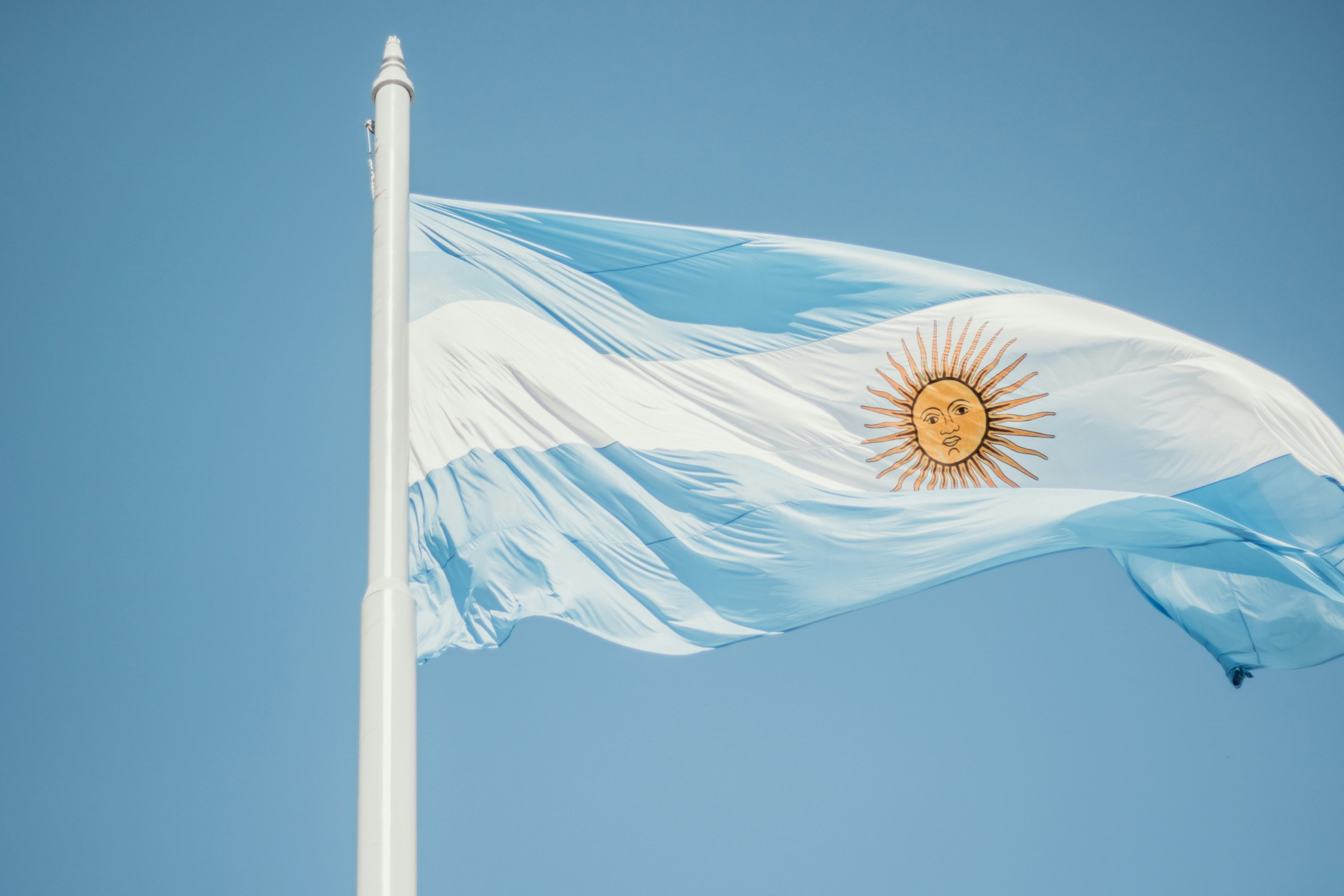
How much does Argentine citizenship by investment cost?
These are the figures announced by the government. They still have to be confirmed in a published resolution.
| Applicant | Donation route |
|---|---|
| Main applicant | $350,000 |
| Spouse | + $100,000 |
| Each child under 18 | + $25,000 |
| Each child aged 18 to 25 (single, no children) | + $100,000 |
In practice, a couple with two small kids pays $500,000. With two university-age kids, the total climbs to $650,000.
The bond route asks the main applicant for $800,000, at zero interest, locked for seven years. It's returned at the end, if Argentina is able to pay.
Donation or bond?
The donation is a cost: the money leaves and doesn't come back. The bond looks smarter until you do the math.
Lending $800,000 for seven years without interest has a real cost. If your money would earn five percent elsewhere, you give up around $230,000 in today's money.
Somewhere above eight and a half percent a year, the bond becomes more expensive than the donation. Argentina's own dollar bonds pay around nine.
And that math assumes you get the money back. The bond is a loan to the Argentine state, and Argentina has defaulted on its debt many times. If it defaults or restructures again within those seven years, you could get back much less than you lent, much later, or nothing at all. Your citizenship would not be refunded either way.
So in most cases the donation is the cleaner choice. The bond is a bet on Argentina.
What does the Argentine passport give you?
It opens almost 170 countries without a visa, which puts Argentina in the top twenty in the world. That includes Schengen, Japan, Mexico and the UK, with its new electronic authorization.
The gaps are the US, Canada and Australia, which still require a visa. Milei is negotiating the American visa waiver, but nothing is signed.
Even so, every Caribbean passport sits behind it. And it belongs to a G20 country of almost fifty million people, with Buenos Aires attached: a real place you might actually want to live in one day.

What comes with it that nobody puts in the brochure
- It's for life. Argentine citizenship can't be renounced, by natives or by the naturalized, and children born afterwards inherit it.
- You travel as an Argentine. You enter and leave Argentina on Argentine documents, so no more arriving as a tourist.
- Voting is compulsory, although the fine for skipping it is symbolic.
- Dual nationality isn't universal. China and India don't accept it, so their nationals would likely swap passports rather than add one. Not a detail, considering China is one of the target markets.
Two myths in the sales material
"A backdoor to Spain." Spain naturalizes Ibero-Americans after two years, but only nationals "de origen", meaning by birth. A citizen by investment is back to the standard ten years.
"Live and work anywhere in South America." The Mercosur residence agreement covers naturalized citizens only once they've held the nationality for five years.
Do you become an Argentine tax resident?
This is where most of what we've read online is wrong. Argentine tax law treats every national, native or naturalized, as a tax resident by default, which means tax on worldwide income plus a wealth tax.
In March, the government added a clause to its labor reform: citizens by investment are not tax residents "by the sole fact" of their naturalization. For tax purposes they're treated as foreigners.
There are two catches. Spend twelve months in the country and you become resident anyway. And the clause points to the exact article of the decree that a court has declared null.
Our advice: get a local tax opinion before paying.
Why pay, if ordinary naturalization takes only two years?
Argentina is among the fastest countries in the world to naturalize. In Europe the clock is long: Italy and Spain ask for ten years of residence. In Argentina it's two. And a child born in Argentina is Argentine, whatever the parents' passports.
So why pay for a shortcut? Because since 2025 those two years must be continuous, and the decree means it literally: not a single trip abroad. One weekend in Montevideo and the clock restarts. For anyone with a global life, that's practically impossible.

Two years living there also makes you an Argentine tax resident, with the wealth tax on everything you own worldwide. What the $350,000 really gets you is time.
Why Argentina is doing this, and why investors are listening
For Argentina, the first reason is dollars. The country has a wall of foreign currency debt coming due in 2027, and the firms advising the government talk about up to $2.5 billion if demand shows up.
Caputo says the idea came from American tech founders who asked Milei about citizenship at Sun Valley, back in 2024. The target markets are the US, China, France and Germany. When a country builds a program to raise money, it has an interest in keeping it alive. That's good for applicants, until the politics change.
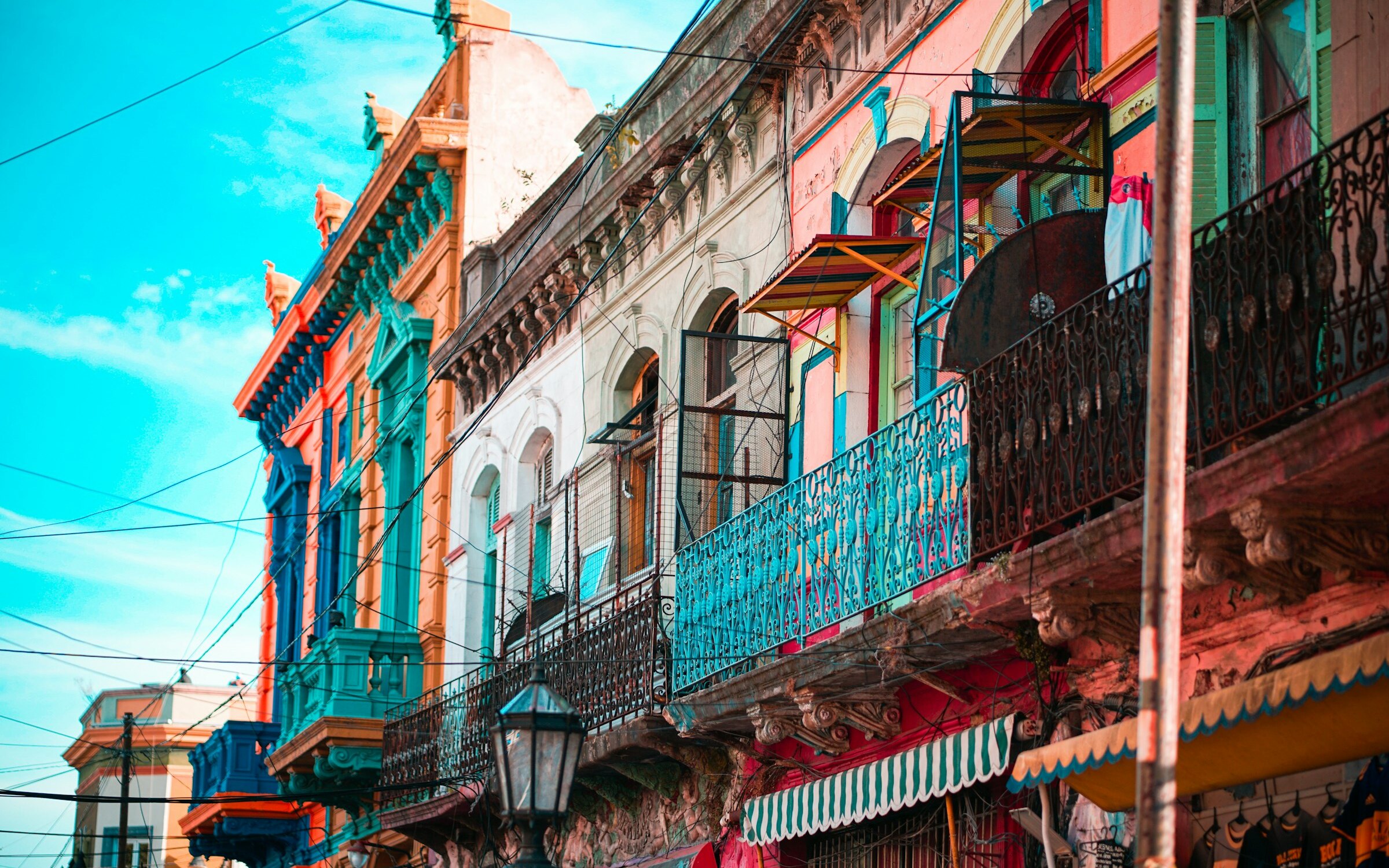
For investors, there are a few theses, essentially, and they all see the Southern Cone as a region that could stay insulated if the world falls apart, for whatever reason. The main one is the stability play, in case of a third world war. As a system, Switzerland is potentially more resilient, and for capital, Switzerland and Singapore remain the right play. Physically, far from conflict and even from radioactive fallout, the place to be is the Southern Cone, and Argentina is its heart.

- Distance. Far from the conflicts of the northern hemisphere, geographically and politically.
- Resources. Food, water, energy and land. Argentina has Vaca Muerta, lithium, gold and one of the largest agricultural sectors in the world.
- Time zones. Buenos Aires is one or two hours ahead of New York, so you can work with the US and Europe on the same day.
- Price. A great life in Buenos Aires still costs a fraction of Lisbon or Milan.
- Culture. Buenos Aires is the most European city outside Europe. Many Italians feel at home there within a week.
That's also why Peter Thiel's name keeps coming up. He became a New Zealand citizen in 2011 after spending, by the government's own count, twelve days in the country. In April 2026 he moved to Buenos Aires with his family and met Milei at the Casa Rosada, and the local press reports land bought near Punta del Este. A second passport is insurance, and you buy insurance before the fire.
The risks: what could go wrong
1. The price isn't law yet
The $350,000 lives in a press release and in a minister's speech. No resolution has been published that puts it into law. The bond terms, the application portal, the fees and the rules for agents aren't public as we write. Nobody holds a passport through this program yet, so every timeline you hear is a guess.
2. A court has already declared the decree null
The whole investment route lives inside one decree, a DNU, the "necessity and urgency" decree Argentine presidents use to legislate without Congress.
On 30 June 2026, the national electoral appeals court declared that decree null in its entirety. The reasoning: citizenship comes with the right to vote, and the Constitution forbids presidents from touching electoral matters by decree. The case was brought by a Chinese shopkeeper, Liping Yang, whose file had nothing to do with investment.
The government appealed, and the Supreme Court took the case in early October. There's no date for a ruling.
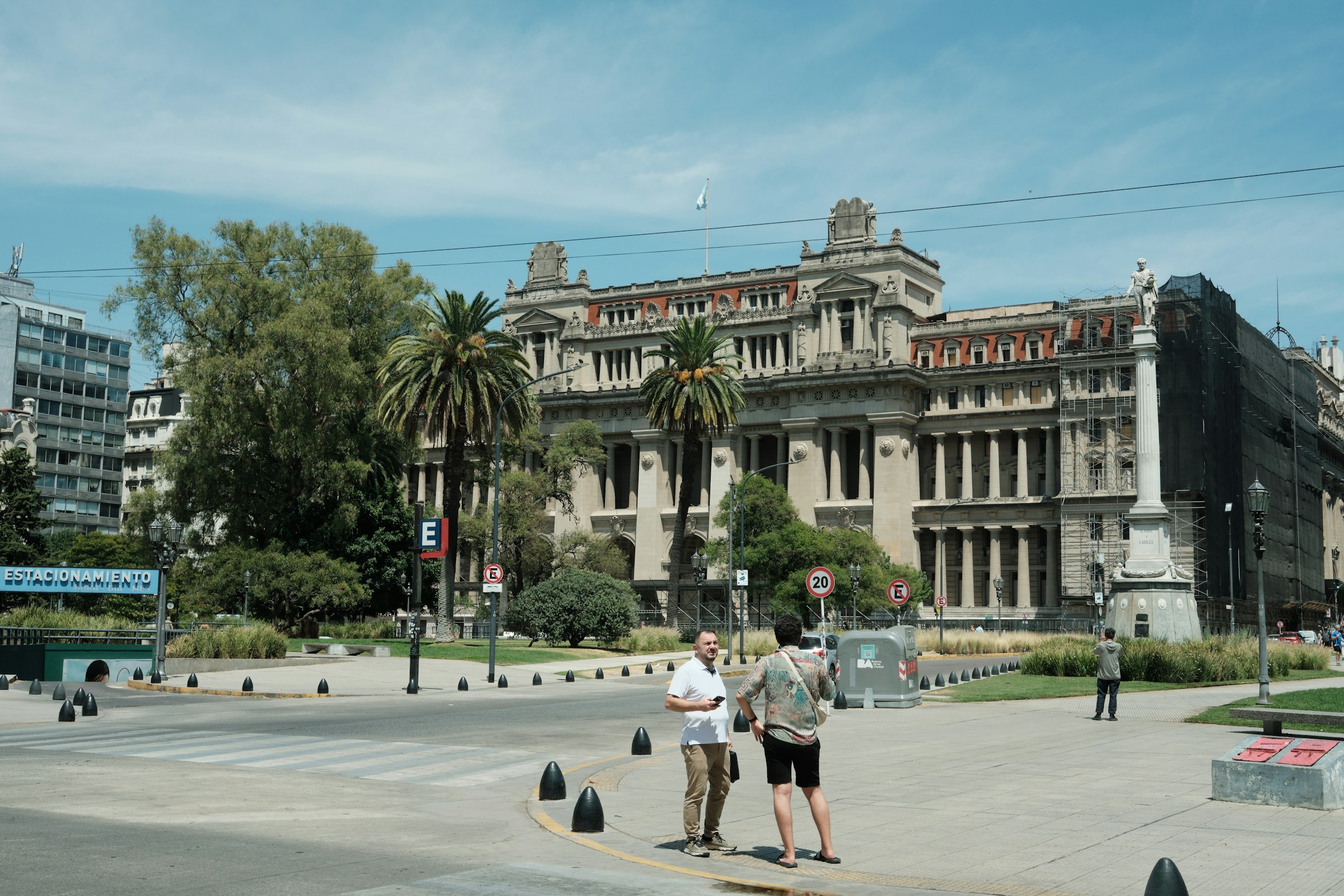
The critics argue that the Constitution grants citizenship after two years of residence and allows a shortcut only for "services to the Republic". The constitutionalist Andrés Gil Domínguez put it bluntly in La Nación: in his view, citizenship can't be sold. The supporters, starting with Caputo, expect it to become the most successful program of its kind.
Our read, through a public law lens: the economic logic is strong and the legal foundation is weak. Built by decree, its life will be decided by the judges and by the ballot box.
3. Three bills in Congress
Within three days of the Paris launch, two bills to kill the program landed in the Chamber of Deputies, and a third had been waiting in the Senate since August. We went through them against the bill texts and the press.

| Bill | What it does | Already granted citizenships |
|---|---|---|
| Capitanich (Senate) | Bans citizenship by investment, restores the two-year residence rule, dissolves the new agency. Keeps residency by investment. | Protected |
| Rossi (Deputies) | Treats open files as withdrawn and declares granted citizenships invalid. | Cancelled |
| Carignano (Deputies) | Repeals the whole program in five articles. | Not specified |
Rossi's bill is the one we find hardest to defend. Argentine citizenship can't even be renounced, and only a judge can annul it, for fraud. The last law that stripped Argentines of their citizenship came from the military junta in 1978, and the first democratic Congress wiped it out.
As of now, the bills don't worry us much. In Argentina, as in Italy, a new law doesn't normally undo what was lawfully completed, and Milei's own decree let files already in process continue under the old rules. A ban would also have to pass both chambers. The Peronists hold about a third of the Senate, their weakest position since democracy came back, and Milei's party alone has enough deputies to sustain a veto. Bills that don't move expire, and these ones expire in early 2028.
4. The 2027 presidential election
The date that matters is 10 December 2027, when the next president takes office. Today the race is open: the latest polls put Milei and Axel Kicillof, the Peronist governor of Buenos Aires province, roughly level in a runoff.
No candidate has promised to scrap the program yet. But what a decree creates, the next government can undo with another decree, no Congress needed. The early files are the best protected: if we were applying, we'd want ours in well before the end of 2027, and we'd watch the Supreme Court more than Congress.
5. Brussels and Washington
Since December 2025, the EU can suspend visa-free travel for any country that grants citizenship by investment to people with no genuine link to it. The rule was written with the Caribbean in mind, and in June 2026 the Commission wrote to five islands asking them to close their programs by 2028.
On paper, Argentina now fits the same definition. We don't expect Brussels to cut off a G20 partner over a few thousand passports. But Schengen is the main thing you're paying for, and it's no longer guaranteed by default. The same logic applies in Washington, where the visa waiver talks are still open.
Who is it for?
It makes sense if you want the strongest passport any investment program offers today, you have no plan to move, the money doesn't change your life, and you can file early.
It makes less sense if you're counting on Spain or the EU through the back door, you need the US visa waiver, or you're Chinese or Indian and would lose your original passport. And if you have time and are willing to actually live there, the ordinary route costs a fraction.
Argentina vs the alternatives
Whether there's a better option depends on what you need. Here's how Argentina compares with the routes we look at most often.
| Option | Entry point | What you get | Money back? | Schengen |
|---|---|---|---|---|
| Argentina | $350,000 donation | Citizenship | No | Visa-free travel |
| Portugal cultural donation | €200,000 (low-density areas) or €250,000 | Residency; permanent residence after 5 years and citizenship eligibility after 10, both counted from the first residence permit | No | Residency |
| Dominican Republic | About $200,000 in real estate | Permanent residency from day one; eligible to apply for citizenship after 6 months | Yes, you keep the property | No |
| Caribbean programs | From about $200,000 | Citizenship | Depends on the route | Visa-free, under EU pressure |
| Turkey | $400,000 in real estate | Citizenship | Yes, you keep the property | No |
| Italy Investor Visa | €250,000 startup equity | Residency; citizenship eligibility after 10 years | Equity, subject to risk | Residency |
Portugal
The cultural donation needs about a week a year on the ground. It takes time: permanent residence after five years from the first residence permit and, since May 2026, citizenship eligibility after ten. But it's a European path, residency first and citizenship later, cheaper than Argentina and with a different set of risks.
Dominican Republic
Almost nobody talks about it, but it's a great option. Real estate qualifies, permanent residency comes straight away, and you keep the asset. You can then apply for naturalization after six months. The trade-off is a weaker passport, with about seventy countries visa-free and no Schengen.
The Caribbean
Fast, but Brussels wants these programs closed by 2028, and the US and UK have already restricted visas for some of the islands.
Turkey
You keep the asset, but there's no Schengen access.
Italy
If what you need is Europe without moving, the Italy Investor Visa starts at €250,000 through an Italian Innovative Startup, with no minimum stay to keep the permit and family included.
In our view, the strongest plan B combines a Latin American passport or residency with a European residency. The two hemispheres hedge each other.
How Bitizenship can help
We assist clients on the Argentine program together with a partner team on the ground, and we run European residency routes end to end, with administrative support and a network of vetted lawyers and tax advisors. That interest is one more reason we wanted to put the catches in writing first.
For investors who also want exposure to the Bitcoin ecosystem through the same vehicle, we structured two European programs.
The Bitcoin Dolce Visa is a €250,000 Class B equity investment in Bitizenship Italia S.r.l., a Milan-based Innovative Startup. It's a startup company, not a fund. Its treasury is held in BTC as working capital and deployed for non-custodial Bitcoin Layer-2 validation and related R&D. The company retains ownership of its assets and does not lend its Bitcoin holdings. Visa approval comes before the capital transfer. Startup risk applies, and distributions are not guaranteed.
The Bitcoin Ecosystem Golden Visa is a Golden Visa-eligible private equity fund that invests in a fully owned Portuguese company focused on the Bitcoin ecosystem. The qualifying investment is €500,000, with fourteen days of presence every two years. Investors gain exposure through the company's activities, not through a direct Bitcoin purchase. Private equity risk applies, liquidity is limited, and capital can be lost.
In both cases, the investment is made in euro through compliant banking rails, not in Bitcoin.
Talk to our team
If you're considering Argentina, or one of the alternatives above, get in touch. You can book a call, use the form on this page to arrange a call with our specialist on the ground.
FAQs
How much does Argentina's citizenship by investment cost?
The announced price is a $350,000 donation for the main applicant. Each family member adds to it: a spouse adds $100,000 and each child under 18 adds $25,000. The alternative is a zero-interest government bond, $800,000 for the main applicant, held for seven years. The final terms have not yet been published in a legal resolution.
Do I need to live in Argentina?
As announced, no. There is no obligation to live there and no minimum stay. Spending twelve months in the country, however, can make you an Argentine tax resident.
When can I apply?
The government says applications should open before the end of 2026. The application portal and the implementing rules haven't been published yet.
Can Argentine citizenship obtained through investment be taken away?
Under current law, Argentine citizenship can't be renounced and can only be annulled by a judge for fraud. One bill in Congress would declare these citizenships invalid, but it faces serious constitutional objections and limited political support.
Does Argentine citizenship give me the right to live in Spain or across South America?
Not quickly. Spain's two-year route applies only to Argentines by birth, and the Mercosur residence agreement covers naturalized citizens only after five years of nationality.
Is citizenship by investment guaranteed?
No. Every application goes through due diligence by several agencies, and any one of them can block it. Program terms can also change, and citizenship is never automatic or guaranteed.
Read next
- Citizenship by Investment in 2026: Every Active Program, Real Cost, and What You Actually Get
- Golden Visa Program Risks in 2026: EU Pressure, Past Closures, and Which Programs Could End Next
- How to Get a Second Passport in 2026: Descent, Naturalization, and Investment
Disclaimer:
This article is published by Bitizenship for informational and educational purposes only and is not legal, tax, immigration, investment or financial advice, nor an offer or solicitation to subscribe to any investment product. Program terms, eligibility criteria, processing times and tax regimes change frequently and vary by individual circumstances. The Bitcoin Dolce Visa involves an equity investment in Bitizenship Italia S.r.l., an Italian private company. The Bitcoin Ecosystem Golden Visa involves an investment in a private equity fund. Review the official documentation and consult independent legal, tax and financial advisors before making any decision. Past performance does not guarantee future results. Capital is at risk. Residency and citizenship outcomes depend on meeting all legal, language, residency and integration requirements and are never guaranteed.
Photo credits: all photos in this article are from Unsplash, used under our Unsplash+ license, by Barbara Zandoval (La Boca), Getty Images (Buenos Aires aerial), Angelica Reyes (Argentine flag), Fernando Tavora (Patagonian lake), Mauricio Guardiano (Buenos Aires street), Shai Pal (Fitz Roy), Frans Ruiter (Palacio de Tribunales) and Manuel Cortina (National Congress). Thank you to the photographers.
Gain residency and citizenship for you and your family. Enjoy the freedom to live, work, do business.
