European Citizenship by Descent in 2026: Ireland, Italy, Poland (and What to Do If You Don't Qualify)
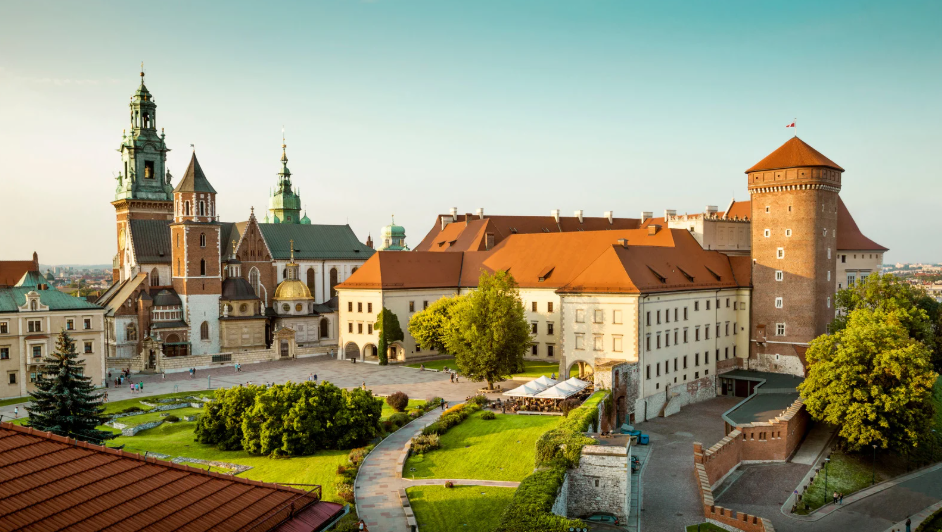
European citizenship by descent is still the cheapest legal route into the European Union, and 2026 is the year it became significantly harder to use.
In 2024, EU countries granted citizenship to 1,177,232 people, an 11.6% increase on the year before (Source: Eurostat).
A meaningful share of that growth came from ancestry claims filed by Americans, Brazilians, Argentinians and Australians whose great-grandparents left Europe a century ago. That door has narrowed sharply.
Italy shut down multi-generational claims in March 2025, Spain's descendants law expired in October 2025, and Ireland's official processing queue now runs about twelve months.
The team at Bitizenship sees the fallout weekly: families who spend a year on genealogy only to discover the chain broke in 1928.
This guide covers what still works, what changed, and what your options are when the answer comes back no.
Key Takeaways
- Italy's Law 74/2025 ended great-grandparent claims filed after 27 March 2025.
- Ireland's grandparent route remains open, with roughly 12-month processing and a strict registration chain rule.
- Poland allows unlimited generations but has an 18 to 24 month queue.
- European citizenship by descent is free to claim but costs 18 to 36 months of documentation work.
- Bitizenship offers residency pathways in Portugal and Italy for investors who fail descent tests.
Why European Citizenship By Descent Got Harder In 2026
For most of the last two decades, ancestry was treated as a nearly unlimited entitlement. Prove an unbroken chain of transmission and the passport followed, regardless of how many generations separated you from the emigrant. That assumption no longer holds across most of Europe.
Three things changed at once:
- Italy introduced Article 3-bis of Law 91/1992, ending unlimited transmission for new applications.
- Spain's Ley de Memoria Democrática, the so-called grandchildren's law, closed to new filings in October 2025.
- Portugal's Sephardic descent route is no longer open to new applicants.
- Backlogs in Ireland, Poland and Germany turned "free" claims into multi-year projects.
The pressure driving this is volume, not politics alone. Italy's Foreign Ministry estimated that 60 to 80 million people worldwide were potentially eligible under the pre-reform rules (Source: Italian Ministry of Foreign Affairs).
No consular network can absorb that. If you are mapping timelines across programs, the golden visa citizenship timeline comparison shows how descent stacks up against the paid alternatives.

Ireland: The Grandparent Route And The Foreign Births Register
Ireland is now the most accessible major ancestry route in the EU, and it did not tighten in 2025 or 2026. If one of your grandparents was born on the island of Ireland and your parent was born abroad, you can register your birth on the Foreign Births Register (FBR) and become an Irish citizen.
Who qualifies
Under the Irish Nationality and Citizenship Act 1956, you can enter the FBR if:
- One of your grandparents was born in Ireland, or
- One of your parents was an Irish citizen at your birth without being born in Ireland, whether through FBR registration or naturalisation.
Once you are entered on the register, you are legally an Irish citizen and can apply for a passport.
The registration chain rule that disqualifies most great-grandchildren
This is where the majority of hopeful applicants fall out. Irish citizenship passes to the next generation only if the parent registered on the FBR before the child was born. Registration is not retroactive.
The practical effect:
- Great-grandparent as your closest Irish-born ancestor plus an unregistered parent equals no claim.
- Your parent registering in 2026 does nothing for you if you were born in 1994.
- Expectant parents can request urgent processing precisely because of this rule.
If your parent is alive and eligible but unregistered, and you plan to have children, the sequencing matters enormously.
Documents, fees, and the 12-month queue
Ireland runs a single centralised process through the Department of Foreign Affairs in Dublin. There is no consular lottery.
- Fee: €278 for adults, €153 for children.
- Processing: approximately 12 months for a completed application, processed in strict date order.
- Documents: original civil birth and marriage certificates for you, your parent, and the Irish-born grandparent, plus certified ID copies and a witnessed application form.
- Common failure: photocopies instead of originals, and witness certification that paraphrases the required wording.
Ireland is the cleanest route on this list if you qualify, which is why it belongs at the top of any second passport checklist.
Italy: What Law 74/2025 Actually Changed For Jure Sanguinis
Italy was, for over a century, the most generous descent regime in Europe. It is no longer. This section is the one to read carefully, because a great deal of content published before mid-2025 is now wrong.
The new Article 3-bis test
Decree-Law 36/2025 of 28 March 2025 was converted into Law 74/2025, which entered into force on 24 May 2025. It inserted Article 3-bis into Law 91/1992. The rule: a person born abroad who holds another citizenship is deemed never to have automatically acquired Italian citizenship, unless a statutory exception applies.
The main exceptions are narrow:
- A parent or grandparent who holds, or held at death, exclusively Italian citizenship.
- An Italian parent who legally and continuously resided in Italy for at least two years before the applicant's birth.
- An application formally submitted, or a consular appointment confirmed by the authority, by 11:59 PM Rome time on 27 March 2025.
Descent from a great-grandparent or a more remote ancestor is no longer sufficient for new filings. That is the reform in one sentence, and it removes the pathway that most Italian-American and South American applicants were relying on.
The March 2025 cutoff and the Constitutional Court
The Turin Civil Court referred Article 3-bis to the Constitutional Court, arguing it was unreasonable to treat two people with identical genealogy differently based on a single day's filing difference. On 12 March 2026 the Court's press office announced the challenges were partly unfounded and partly inadmissible. The full reasoned judgment, no. 63/2026, was filed on 30 April 2026.
What that means in practice:
- The restrictions remain fully in force.
- There is no automatic reopening of applications rejected under the new rules.
- The Court of Cassation has taken a different line on some related questions, and its Joint Divisions have not ruled, so litigation continues.
Anyone promising you that the reform will be reversed is selling optimism, not analysis.
The minor issue and other chain breakers
Even applicants who still meet the parent or grandparent test frequently fail on transmission. Ministry of Interior Circular no. 43347 of 3 October 2024, applying Court of Cassation guidance, holds that where an Italian ancestor naturalised abroad while their minor children were living with them, those children lost Italian citizenship at that moment, even if born before the naturalisation.
Other common breaks:
- Voluntary foreign naturalisation by the ancestor before the next generation's birth, under Law 555 of 1912.
- Maternal lines where the child was born before 1 January 1948, which historically required a court case in Italy.
- Missing or contradictory civil records that cannot be reconciled.
What Italy still offers people with Italian roots
There is a genuine consolation prize, and it is underreported. Article 1-bis, paragraph 2 of Law 74/2025 cut the residence requirement for discretionary naturalisation from three years to two for a foreigner whose parent or grandparent is or was an Italian citizen by birth.
- It is a discretionary grant, not an entitlement.
- It requires actual relocation, municipal registration, and two uninterrupted years of legal residence.
- Standard non-EU naturalisation still requires ten years.
So Italian roots have not become worthless. They have been converted from a paper claim into a residency requirement, which is the same trade the country now offers through Italian residency pathways more broadly.
Poland: Unlimited Generations, One Office, And A Two-Year Queue
Poland is the sleeper option, and in 2026 it is arguably the best remaining descent route for people whose Italian claim just died. There is no generational cap. If the chain of citizenship is unbroken, you have been a Polish citizen since birth and the state simply confirms it.
The requirements in outline:
- Your ancestor must generally have held Polish citizenship under the 1920 Citizenship Act, which took effect on 31 January 1920, or later.
- The chain must survive the historic loss rules: acquiring a foreign citizenship before 1951, foreign military service, or accepting foreign public office without government consent could all sever it.
- Every foreign document requires an apostille and a sworn (przysięgły) Polish translation. A standard certified translation is not accepted.
- The administrative fee for the confirmation decision is modest, at 58 PLN.
The bottleneck is structural. The Masovian Voivodeship Office in Warsaw is the sole adjudicator for anyone who has never lived in Poland, and it received roughly 24,600 applications in 2025 against a caseworker headcount reported in the single digits to low teens (Source: Masovian Voivodeship Office).
Current waits run 18 to 24 months from submission to decision, cases are handled strictly in order received, and there is no paid fast track.
Poland rewards patience and punishes sloppy files, which is a fair description of most routes on the easiest citizenship options list.
Lithuania, Germany And Hungary: The Secondary Routes Worth Checking
If Ireland, Italy and Poland come back negative, three more jurisdictions are worth a serious look before you give up on ancestry entirely.
Lithuania
Lithuania treats ancestry cases as restoration rather than ordinary descent. The two threshold tests are that your ancestor held Lithuanian citizenship before 15 June 1940, and that the family left Lithuania before 11 March 1990.
Restoration cases are one of the recognised grounds on which Lithuania permits multiple nationality, but eligibility must be established on the facts rather than assumed from holding an EU or NATO passport.
Germany
Germany's ancestry routes are narrow in scope but generous in reach. Article 116(2) of the Basic Law restores citizenship to people deprived of German nationality on political, racial or religious grounds between 30 January 1933 and 8 May 1945, and to their descendants.
Section 15 of the Nationality Act, in force since 20 August 2021, extends that entitlement to people who lost or were denied German citizenship in connection with Nazi persecution in other ways, including those who naturalised abroad before formal deprivation.
Key features:
- The claim extends to children, grandchildren, great-grandchildren and beyond, with no generational cap.
- No German language requirement, no residence requirement, no renunciation of existing nationality.
- Processing through the Federal Office of Administration commonly runs two years or more.
Hungary
Hungary offers simplified naturalisation to people who can document a Hungarian ancestor, but with a condition the others do not impose: you must demonstrate Hungarian language ability, assessed in an interview. For most applicants that is a multi-year commitment, not a paperwork exercise.
None of these is a substitute for the big three, but each closes gaps the others leave open, particularly for families displaced by twentieth-century borders. Americans working through several possible lines at once will find the second passport options for Americans breakdown useful for sequencing.

The Real Cost Of "Free" Citizenship: Documents, Apostilles And 18 To 36 Months
Descent claims are marketed as free. The government fees genuinely are low. What they cost you is time and administrative persistence, and that budget is routinely underestimated by a factor of three.
Here is what the paperwork actually involves:
- Vital records for every generation in the line, in long form, from foreign registries that answer at their own pace.
- An apostille on each foreign document, issued by the authority of the country that produced it.
- Certified or sworn translations, with Poland specifically requiring a sworn translator.
- Consular appointments booked through systems like Italy's Prenot@Mi, which can be the longest single wait in the process.
- Government fees that are small in isolation: €600 per adult applicant in Italy, €278 in Ireland, 58 PLN in Poland.
Realistic totals for a clean file, start to finish:
- Research and record gathering: 3 to 12 months.
- Apostilles and translations: 2 to 6 months.
- Adjudication: 12 months in Ireland, 18 to 24 months in Poland, 2 years or more in Germany.
Call it 18 to 36 months for a straightforward case, and longer if a single ancestor's naturalisation date is contested. That is the honest comparison point against a residency by investment route, which trades capital for certainty and speed.
What To Do If You Do Not Qualify: Residency First, Passport Later
If the chain is broken, no amount of genealogy fixes it. The remaining legal route to Europe is residency by investment, and the honest framing is that it is the paid door. You buy a legal status and a clock, not a passport.
Two programs are worth understanding in detail, and their clocks now run very differently.
1. Portugal: five years to permanent residency, then a longer citizenship path
Portugal's Golden Visa remains the most flexible residency program in Europe for people who do not want to relocate. Bitizenship's Portugal Fund is a Golden Visa-eligible private equity fund requiring a €500,000 qualifying investment, structured around a Portuguese company focused entirely on the Bitcoin ecosystem.
What it gives you:
- A stay requirement of only 14 days every two years.
- Family inclusion, Schengen access across 27 countries, and access to Portuguese healthcare and education.
- Eligibility for permanent residency after five years of legal residence, subject to A2 Portuguese, a clean criminal record and other criteria.
What changed, and this matters: Lei Orgânica n.º 1/2026 was published on 18 May 2026 and entered into force on 19 May 2026. Naturalisation now requires 10 years of legal residence for most nationalities and 7 years for EU and CPLP nationals, counted from issuance of the first residence permit rather than from application.
Applications filed on or before 18 May 2026 remain under the previous regime. Permanent residency at five years is unaffected. Anyone still being sold "citizenship in five years" is quoting a repealed rule, which the 2026 nationality law analysis covers in full.
2. Italy: residency by investment with a genuine ten-year citizenship clock
Italy's Investor Visa under Article 26-bis of Legislative Decree 286/1998 is the fastest paid entry into the EU. Bitizenship's Bitcoin Dolce Visa is built around a €250,000 Class B equity investment in Bitizenship Italia S.r.l., a Milan-based Innovative Startup whose treasury is held in BTC as working capital and deployed for non-custodial Bitcoin Layer-2 network validation and related R&D. The company retains ownership of its assets.
The structural features that make it distinct:
- Visa approval comes before any capital is transferred, after the Nulla Osta and consular visa are issued.
- Processing typically completes in 3 to 6 months.
- The permit is issued for two years and renewed in three-year periods, with no minimum stay requirement to maintain the Investor Visa.
- Withdrawal windows every 24 months, in BTC or EUR, in accordance with Italian corporate law.
Be clear-eyed about the citizenship side. Italy's program is pure residency by investment. Naturalisation requires ten years of genuine legal residence at 183 or more days per year, plus B1 Italian and integration criteria. It is not a citizenship-by-investment program and it is not officially a Golden Visa. If you want the Italian passport, plan to actually live in Italy.
Full requirements are set out in the Italy Investor Visa requirements guide.
How Bitizenship Thinks About The Descent-To-Residency Handoff
Most people arrive at investment migration after ancestry fails them, and they arrive frustrated. That frustration is usually about sequencing rather than money. They spent two years on a claim that was dead in 1928, and they spent it because nobody told them upfront which chain-breaking events to check first.
The team at Bitizenship works with the opposite order of operations:
- Check the descent claim honestly and early, including the naturalisation dates that break chains.
- If a claim exists, pursue it, because it is cheaper than any investment route.
- If it does not, choose the residency program that matches your actual goal, whether that is optionality, Schengen access, or a genuine passport.
- Match the program to your willingness to relocate, since Portugal and Italy demand very different things of you at the citizenship stage.
"Most people save for a second home. The smartest ones save for a second passport. One gives you a better view. The other gives you and every generation after you options no amount of money can buy later." Alessandro Palombo, Co-Founder, Bitizenship
For ongoing analysis of how these programs shift, Alessandro writes The Ale's Letter, where the regulatory changes tend to get covered before they reach mainstream coverage.
Conclusion
European citizenship by descent in 2026 is a narrower and slower proposition than it was two years ago.
- Ireland's grandparent route through the Foreign Births Register remains the most accessible, provided your parent's registration happened before your birth.
- Italy has closed multi-generational claims for anything filed after 27 March 2025, and the Constitutional Court confirmed that in 2026.
- Poland still allows unlimited generations but makes you wait 18 to 24 months in a single Warsaw queue.
- Germany, Lithuania and Hungary cover specific historical gaps.
When none of those lines holds, residency by investment is the remaining legal route, and Bitizenship structures two of them: a €500,000 Golden Visa-eligible fund pathway in Portugal with permanent residency eligibility at five years, and a €250,000 Investor Visa pathway in Italy through a Bitcoin-focused Innovative Startup.
Neither guarantees citizenship, and both carry investment risk.
Get in touch to work out which pathway fits your family's situation.
Read Next:
- US Taxes After You Get EU Residency: FATCA, FBAR, FEIE, and What a Golden Visa Does Not Change
- Buying Property in Portugal in 2026: What It Costs, and What It Does Not Get You
- Italy's €100,000 Flat Tax in 2026
FAQs:
1. What is European citizenship by descent?
European citizenship by descent is the recognition of a nationality you already hold through an ancestral bloodline, rather than a grant of new citizenship. Most European systems operate on jus sanguinis, meaning citizenship passes from parent to child regardless of birthplace, provided no event severed the chain. The state confirms an existing status rather than creating one. Bitizenship works with clients who have exhausted or failed these claims and need a residency-based alternative in Portugal or Italy.
2. Did Italy end European citizenship by descent in 2025?
Italy did not end it, but it narrowed it dramatically. Law 74/2025 introduced Article 3-bis of Law 91/1992, under which a person born abroad holding another citizenship is deemed never to have automatically acquired Italian citizenship unless a parent or grandparent held exclusively Italian citizenship, an Italian parent lived in Italy for two years before their birth, or the application was filed by 27 March 2025. The Constitutional Court upheld the reform in 2026. Bitizenship advises Italian-descent clients to verify eligibility before committing to document collection, and offers the Bitcoin Dolce Visa as a residency route for those who no longer qualify.
3. Which country offers the easiest European citizenship by descent in 2026?
Ireland offers the most accessible route for people with an Irish-born grandparent, through the Foreign Births Register, at €278 for adults and roughly 12 months of processing. Poland is the strongest option for deeper generational lines, since it imposes no generational limit, though waits run 18 to 24 months. Both require an unbroken documented chain. Bitizenship recommends testing these claims first, because they cost far less than any investment migration program.
4. How long does European citizenship by descent take from start to finish?
A realistic estimate is 18 to 36 months for a straightforward case. Research and record collection typically takes 3 to 12 months, apostilles and sworn translations add 2 to 6 months, and adjudication runs roughly 12 months in Ireland, 18 to 24 months in Poland, and two years or more in Germany. Complex or contested lines take longer. Clients who need a defined timeline often compare this against Bitizenship's Italy pathway, where processing typically completes in 3 to 6 months.
5. What are the alternatives if I do not qualify for European citizenship by descent?
The main alternative is residency by investment, followed by naturalisation once residence requirements are met. Portugal offers permanent residency eligibility after five years with a stay requirement of just 14 days every two years, though naturalisation now takes 10 years for most nationalities under Lei Orgânica n.º 1/2026. Italy's Investor Visa is faster to obtain but requires genuine full-time residence for citizenship after 10 years. Bitizenship structures both routes, a €500,000 Golden Visa-eligible fund in Portugal and a €250,000 equity investment in a Milan-based Innovative Startup in Italy, with outcomes subject to legal and program requirements.
Disclaimer:
This article is published by Bitizenship for informational and educational purposes only. It reflects Bitizenship's perspective on the investment migration market and is not intended as legal, tax, immigration, investment, or financial advice, nor as an offer or solicitation to subscribe to any investment product. Comparisons with other firms are based on publicly available information and our own assessment of structural differences in business models. We have aimed for accuracy, but descriptions of programs, regulations, and competitor offerings are necessarily summaries and may not capture every legal nuance. Program terms, eligibility criteria, processing times, tax regimes, and regulatory frameworks change frequently and vary by individual circumstances. The Bitcoin Dolce Visa involves an equity investment in Bitizenship Italia S.r.l., an Italian private company. Any investment decision should be made only after reviewing the official documentation and consulting independent legal, tax, and financial advisors qualified in the relevant jurisdictions. Past performance does not guarantee future results. Capital is at risk. Residency and citizenship outcomes depend on meeting all legal, language, residency, and integration requirements set by the relevant authorities and are never guaranteed. Always refer to official government and regulatory sources, and engage qualified professionals before acting on any information in this article.
Gain residency and citizenship for you and your family. Enjoy the freedom to live, work, do business.
